On incentives: two links below go to the seller and pay this site a commission. This article exists because I couldn’t find a single verifiable customer review for this product, which is not the conclusion a commission would buy.
These statements have not been evaluated by the Food and Drug Administration. This product is not intended to diagnose, treat, cure, or prevent any disease. If you’ve been told your liver enzymes are raised, that’s a conversation with the doctor who told you — early fatty liver is reversible, and following it up matters more than any supplement decision.
This article started as something else.
The plan was straightforward: gather what actual buyers say about HepatoBurn — pull the patterns from Amazon, Trustpilot, Reddit and the forums, separate the enthusiastic from the disappointed, and report the consensus. That’s a useful article, and it’s the one most people searching for HepatoBurn customer reviews actually want.
I couldn’t write it, because after several hours I could not find a single verifiable customer.
Not one review attached to a confirmed purchase. Not one named person who could be contacted. Not one platform with fraud controls where the product is listed.
What I found instead was a large, well-organised body of material designed to look like customer reviews — hosted in places that tell you a great deal about how it got there. That turned out to be the more useful article, so it’s the one you’re reading.
It Isn’t Sold Anywhere That Collects Reviews
Start with the structural reason, because it explains everything downstream.
HepatoBurn is sold direct to consumers through its own website, with ClickBank as the retailer of record. The seller’s page sends buyers only to its own checkout, with ClickBank as the retailer, and the product is not marketed through Amazon, eBay, Walmart or physical retail.
That’s not unusual for this category, and it isn’t sinister on its own. But it has a direct consequence: verified-purchase review systems only exist where purchases happen through a platform that verifies them. No Amazon listing means no Amazon reviews. No retail presence means no retailer reviews.
I also could not find a Trustpilot page for the product. An independent consumer security blog examining the product reached the same place, noting that there are no verified user reviews on the site or on major platforms, and that the testimonials appearing are anonymous.
So the honest baseline: there is no place where a stranger who bought this product can leave feedback that anyone can check. Everything else in this article is what fills that vacuum.
The Subreddit That Doesn’t Exist
This is the detail that convinced me the article had to change.
One page presenting itself as an independent HepatoBurn assessment quotes a testimonial and attributes it to a Reddit user in a community called r/SupplementsForum — describing a 6-week result of 18 pounds lost without dietary changes.
That subreddit does not exist.
The real supplement communities on Reddit are r/Supplements, r/Nootropics, r/AskDocs and similar. “r/SupplementsForum” is a plausible-sounding name invented to make a quote look sourced.
The same page and its neighbours carry quotes attributed to a “Facebook Wellness Group,” a “YouTube product review,” and forum posts on sites with names that don’t resolve to anything. Named individuals appear with first names, last initials and US cities — Carla M. of New York, Mark T. of Seattle, Lisa B. of Atlanta — in a format that is impossible to verify by design.
Once you’ve seen one fabricated platform attribution, the rest of the corpus reads differently.
Reviews Hosted on a Cancer Registry, a University and a Wildlife Agency

Here’s where the HepatoBurn “review” ecosystem actually lives, and I’d encourage you to sit with this for a moment.
Searching for HepatoBurn reviews and complaints returns PDF documents hosted on:
- naaccr.org — the North American Association of Central Cancer Registries, in a WordPress uploads folder
- urop.gatech.edu — Georgia Tech’s Undergraduate Research Opportunities Program, inside a webform upload directory
- wildlife.ca.gov — the California Department of Fish and Wildlife, in a temporary forms folder
- An Amazon S3 storage bucket belonging to a Canadian civic engagement platform
None of these organisations has anything to do with supplements. A cancer registry, a university research office and a state wildlife agency did not publish HepatoBurn reviews.
What happened is a well-known search-engine technique: forms and upload directories on trusted institutional domains get used to host promotional PDFs, because a document sitting on a .gov or .edu address inherits some of that domain’s credibility with search engines. The organisations are victims of it rather than participants.
For you as a reader, the practical lesson is simple and it works everywhere: look at where a document lives, not just what it says. A genuine consumer review does not need to be hosted in a wildlife agency’s temporary file folder.
The “Consumer Alert” That Recommends the Product
The document on the cancer registry’s server deserves its own mention, because its framing is instructive.
It’s titled as a consumer alert, with a headline suggesting that liver enzymes actually went up — the phrasing of a warning, the kind of thing you’d click precisely because it sounds like someone blowing the whistle.
Read it through and it concludes the opposite. It describes the product as legitimate, recommends it for people with mildly elevated liver enzymes or fatty liver, calls it one of the few supplements that lived up to the hype, and points readers to the official website.
The document is written in first person as a personal experiment — nine weeks, every day, bloodwork before and after — and opens by describing finding the product through “a Reddit rabbit hole at 2 AM,” where another user had posted before-and-after labs.
That narrative device does specific work. It borrows the credibility of exactly the thing that doesn’t exist for this product: an unpaid stranger on Reddit with no incentive.
The Sentence About Dental Health
One more, because it takes two seconds and it’s definitive.
Among the promotional PDFs is one hosted on the California wildlife agency’s server, formatted as a HepatoBurn review with pricing and ingredients. Partway through, it invites the reader to read real reviews and see how HepatoBurn can transform your dental health.
Dental health. In a liver supplement document.
That’s leftover copy from a template previously used for an oral care product, left in place when the text was repurposed. It’s harmless in itself. What it tells you is that these documents are produced at volume, by find-and-replace, from a shared template — which is the opposite of what an independent customer review is.
The Third-Party Seller Deflection
Across nearly every piece of HepatoBurn “review” content, the same explanation appears for negative feedback: complaints come from people who bought from unauthorised third-party sellers like Amazon or eBay and received counterfeit bottles.
Hold that next to the other claim made just as consistently on the same pages: HepatoBurn is not sold on Amazon, eBay or Walmart.
Both can’t do the work they’re being asked to do. If the product genuinely isn’t distributed through those channels, then complaints about the actual product can’t be attributed to them wholesale — and if counterfeits are widespread enough to explain most negative reviews, that’s a significant problem in its own right that the pages treat as a footnote.
The deflection also does something more subtle: it pre-frames any bad experience you might have as your own fault for buying wrong. That’s worth recognising when you read it.
What the FTC Says About This Now
This stopped being purely an ethics question in October 2024.
The Federal Trade Commission’s Rule on the Use of Consumer Reviews and Testimonials took effect on 21 October 2024. It prohibits the sale or purchase of fake consumer reviews, including reviews by people who don’t exist or who never had actual experience with the product, and prohibits testimonials that misrepresent the experience of the person giving them. It also covers reviews procured by compensation conditioned on expressing a particular sentiment.
Analyses of the rule note that it allows the agency to seek civil penalties, currently set in the tens of thousands of dollars per violation.
I want to be careful about what I’m claiming. I have no evidence about who produced any specific document described in this article, or what arrangement lay behind it. Affiliate marketers, not brands, produce much of this material, and a brand does not necessarily know what its affiliates publish.
What I can say plainly is that the rule exists, that it covers fabricated testimonials and invented platform attributions, and that a reader encountering a quote attributed to a subreddit that doesn’t exist now has a name for what they’re looking at.
HepatoBurn and Liv Pure Share the Same Blend Names
A finding from the research worth passing on, because it reframes the product itself.
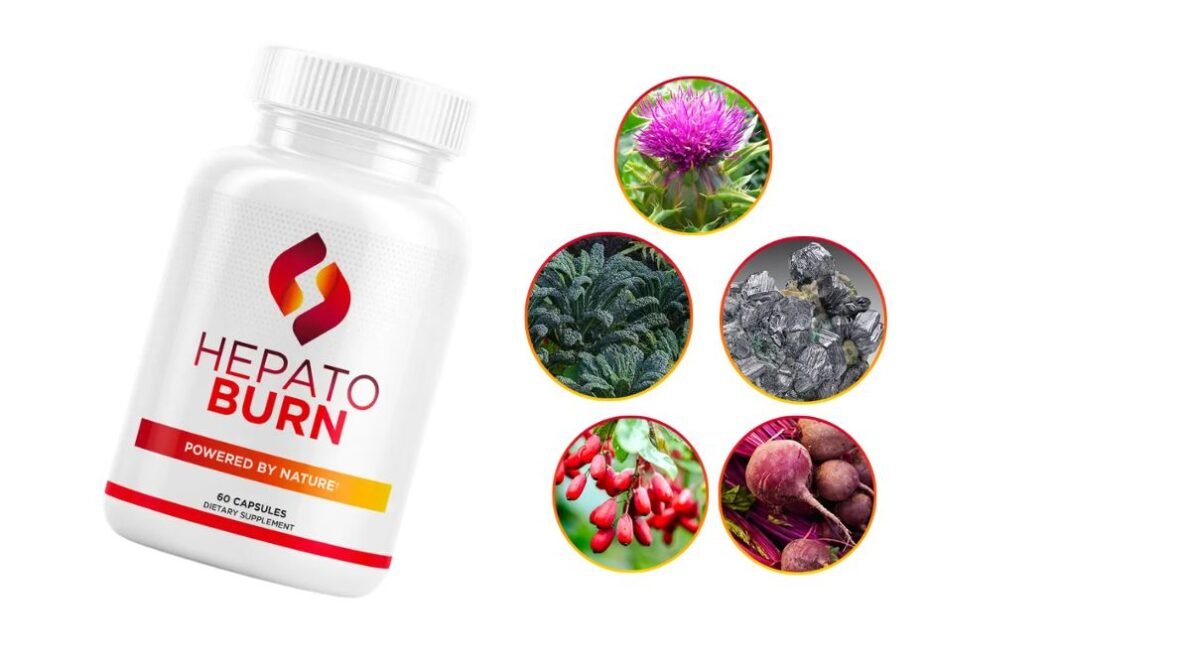
HepatoBurn’s formula is presented as two proprietary blends: a “Liver Purification Complex” and a “Liver Fat-Burning Complex.”
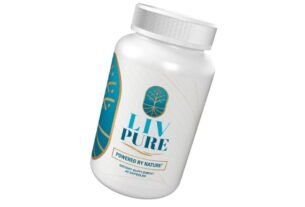
Those are the same two names, in the same order, used by Liv Pure — a separate, heavily marketed liver-and-weight product. And the ingredient lists overlap almost entirely: silymarin, betaine, berberine and glutathione on the purification side; camellia sinensis, resveratrol, genistein, chlorogenic acid and choline on the fat-burning side.
I can’t tell you whether these are the same formula under two brands, one manufacturer supplying both, or one product copying another’s positioning. No page discloses a manufacturer clearly enough to check.
What it does mean practically: if you’ve read about either product, you’ve largely read about both — and “the only product in the world containing this complex,” a claim that appears in this market, is difficult to sustain when two brands describe the same complex by the same name. Our Liv Pure review works through what that shared ingredient list actually does.
How to Check Any Supplement’s Reviews Yourself
This is the transferable part, and it takes about five minutes per product.
Check whether it’s sold anywhere that verifies purchases. Amazon, Walmart, iHerb and pharmacy chains all have verified-purchase systems with fraud controls. Direct-only sales means no independent review pool exists — not because the product is bad, but structurally.
Search the brand name on Trustpilot directly, rather than trusting a rating displayed on the seller’s own page. Check that the Trustpilot listing is for the actual selling domain, not a lookalike subdomain.
Search Reddit through Google using site:reddit.com plus the product name. Real discussion looks different from marketing: people argue, ask follow-up questions, and mention specifics. If the only Reddit “quotes” you find are inside articles rather than on Reddit itself, that tells you something.
Look at where a document is hosted. A .pdf on a university form-upload folder or a government temp directory is not a publication.
Check whether “as seen on” logos link anywhere. Paid newswire distribution puts press releases on financial and news portals that syndicate wire content without editorial review. Many carry disclaimers saying exactly that.
Read the two- and three-star reviews first, when a real pool exists. They’re consistently the most informative — detailed enough to be genuine, balanced enough to be useful.
And search the exact phrasing of a testimonial in quotation marks. If the same sentence appears under different names on different sites, you’ve found your answer.
What This Does and Doesn’t Tell You
I want to be precise about the limits of everything above, because overreaching would undermine the point.
This does not tell you the product doesn’t work. Absence of verifiable reviews is absence of evidence in both directions. Some ingredients in this formula have genuine research behind them — silymarin in particular has a randomised trial showing reduced liver stiffness and GGT in patients with metabolic dysfunction-associated steatotic liver disease. That same trial found no significant change in liver fat, blood lipids, BMI or waist-to-hip ratio, which is a separate problem for a weight-loss framing — but the ingredient isn’t nothing.
It does not tell you the company produced this content. Affiliate networks generate promotional material at scale, often without brand oversight.
It does not mean nobody has had a good experience. People undoubtedly have. There’s simply no way for you to find them, weigh them, or distinguish them from the manufactured version.
What it does tell you is that if your buying decision depends on knowing what real customers experienced, that information isn’t available for this product — and any page claiming to aggregate it should be treated with the scepticism this article has tried to earn.
If You Want to Try It Anyway
That’s a legitimate decision, and there’s a sensible way to do it.
The product is sold with a 60-day money-back guarantee. The sales page says to return the product, “even empty bottles,” and promises a full refund within 48 hours of the product being returned, “less shipping and handling.” At the checkout I opened, ClickBank words its guarantee as “return or replacement of any product within 60 days.” Those are different promises, so read the refund policy before you pay. Current pricing and terms are on the HepatoBurn site.
Four practical protections:
Buy the smallest package, not the six-bottle bundle. You cannot evaluate this product on other people’s experience, so evaluate it on your own — and one bottle is enough to do that.
Screenshot the price and guarantee wording on the day you order, and keep the ClickBank receipt. That’s your refund route.
Diarise day 45, not day 60. Refund conversations take time.
Get baseline bloodwork if liver enzymes are your reason for buying. This is the single most useful thing you can do, and it turns a guess into a measurement. Ask your doctor for liver function tests before you start, and again after eight weeks. That’s real evidence about you specifically — which is more than any review, real or otherwise, could give you.
Where That Leaves You
You came looking for what real customers say about HepatoBurn. The honest answer is that nobody can tell you, and anyone who claims to is working from the same empty well I was.
That’s frustrating, and it’s also useful. It means the decision has to rest on something else: what the ingredients are, what doses they’re at, what the published research on them actually shows, and whether the refund terms make trying it low-risk for you.
For the ingredient analysis — what’s in the formula, what the research supports, and where the dosing lands — see our full HepatoBurn review. That article does the work this one couldn’t, using the only evidence available for a product with no verifiable customers: the science on what’s inside it.
And if raised liver enzymes are what brought you here, the appointment beats both articles. Early fatty liver is reversible, weight loss of 5% to 10% is the intervention with the strongest evidence behind it, and a follow-up blood test tells you more than any supplement review ever could.
Frequently Asked Questions
Are there real HepatoBurn reviews on Amazon or Trustpilot?
I couldn’t find any. The product isn’t sold on Amazon, eBay, Walmart or in retail — the brand’s own material states this — which means no verified-purchase review system exists for it. I found no Trustpilot page either, and an independent consumer blog examining the product reported the same absence.
What about the HepatoBurn reviews on Reddit?
I found quotes attributed to Reddit inside promotional articles, including one credited to a subreddit called r/SupplementsForum, which doesn’t exist. If you want to check for yourself, search site:reddit.com hepatoburn in Google — that shows actual Reddit content rather than quotes about Reddit.
Why are so many HepatoBurn reviews hosted as PDFs on university and government websites?
Because form-upload and temporary file directories on trusted domains can sometimes be used to host outside documents, and search engines give weight to the host domain. The organisations involved aren’t publishing this material. It’s a search-engine technique, and spotting it is a genuinely useful skill for any product research.
Does the absence of reviews mean HepatoBurn doesn’t work?
No. It means there’s no customer evidence available in either direction. Judge it on the ingredient research, the published doses, and the refund terms — and if you try it, get liver function tests before and after so you have real data about yourself rather than relying on anyone else’s account.

Raphael Albert is the founder and content creator of Nutra Pulse. Passionate about health, nutrition, fitness, and wellness, he spends his time researching scientific studies, health trends, and evidence-based lifestyle strategies to create informative and easy-to-understand content. While he is not a doctor or licensed healthcare professional, his goal is to help readers make more informed wellness decisions. All content is for educational purposes only and should not replace professional medical advice. Always consult a qualified healthcare provider regarding your health concerns.