Straight up: this review carries an affiliate link, so we may earn a small commission if you buy through it, at no added cost to you. It doesn’t shape the verdict – and you’ll see below exactly why we spend most of this review telling you what to verify before you spend a cent.
These statements have not been evaluated by the Food and Drug Administration. This product is not intended to diagnose, treat, cure, or prevent any disease – including reflux, IBS, constipation, or intestinal inflammation. Digestive symptoms can signal real medical conditions, so a supplement is not a treatment, and nothing here replaces care from your own clinician.
New to gut supplements? Our Bioma Probiotics review breaks down what an actual, strain-labeled gut probiotic looks like – which is exactly the yardstick this VivoGut review needs, because the two products turn out to be very different animals wearing similar marketing.
VivoGut Review: The Short Version
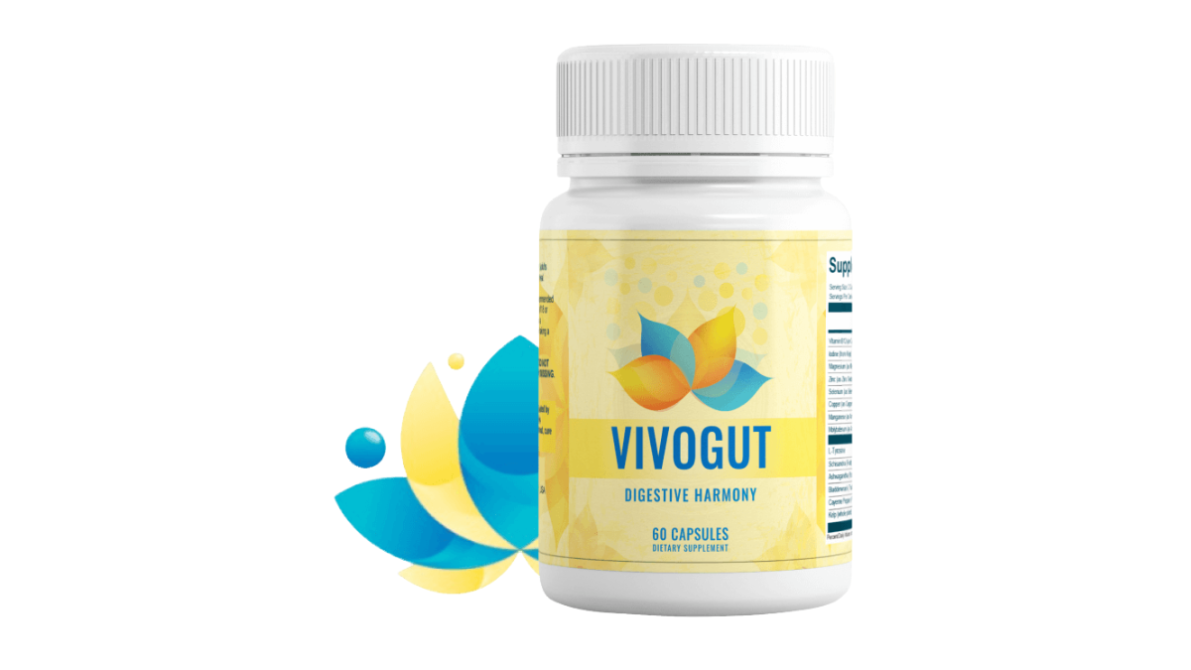
Here’s the honest bottom line of this VivoGut review: it’s marketed like a probiotic, but the ingredients its own official pages actually name aren’t probiotic strains at all – they’re marine botanicals, an adaptogen, and minerals. VivoGut is sold as a “14-in-1 gut health formula” for bloating and sluggish digestion, and much of its advertising leans on “restore your gut flora” language.
Yet the components listed across its official sites are things like Bladderwrack, Kelp, Ashwagandha, Cayenne, L-Tyrosine, Magnesium and Vitamin B12 – a lineup you’d expect from a thyroid or “sea vegetable” supplement, not a microbiome product.
No official page we found discloses a probiotic strain code, a CFU count, or per-ingredient doses. So the single most important question here isn’t “does it work?” It’s “is this even the product the marketing says it is?”
One thing to settle first: if you have ongoing digestive pain, reflux, blood in your stool, or unexplained weight change, that’s a doctor’s visit, not a supplement decision. VivoGut is not a treatment for any gut condition, and no capsule should stand between you and a diagnosis.
The Core Problem: Two Products Are Sharing One Name
This is the finding that shapes everything, so it’s worth being specific. Search VivoGut’s official and affiliate pages and you’ll find two completely different formulas presented for the same product. One set of official sites lists a marine-and-mineral blend: Bladderwrack, Ashwagandha, Cayenne Pepper, Kelp, L-Tyrosine, Selenium, Copper, Magnesium, Vitamin B12.
A different set of review pages describes a conventional gut formula entirely: Bacillus coagulans, inulin, L-glutamine, ginger, fennel – or even “probiotics and digestive enzymes.” Those aren’t small variations. They’re different categories of supplement.They can’t both be inside one capsule. When five or more “official” pages present conflicting ingredient lists under one brand name, it’s a textbook sign of a marketing network without central quality control – and it means the “official site” that convinced you may not describe the bottle that ships.
Before you evaluate any ingredient, you have to solve this: which VivoGut is actually in the box? As of our review, the honest answer is that you can’t know for certain until you read the physical Supplement Facts panel – and that uncertainty is itself the central finding.
What VivoGut Actually Is
Cutting through the marketing, VivoGut is a twice-daily capsule aimed at adults with bloating, irregularity, and “my digestion is unpredictable” complaints. Per the VivoGut official website, it’s made in a US, FDA-registered, GMP-certified facility, marketed as non-GMO, vegan and gluten-free, priced around $49-$79 a bottle, and backed by a 60-day money-back guarantee.
On the positive side of the ledger: there’s a real refund mechanism, the manufacturing claims are standard for the category, and at least the pages name some ingredients rather than hiding everything behind “proprietary complex.”
The problems are the ones above and below: the formula isn’t consistent across the brand’s own pages, no page discloses per-ingredient doses or any CFU, and there’s no clinical trial on the finished product. What you’re really buying is a marine-botanical blend marketed with microbiome language – and you can’t fully verify which version you’ll get.
The “Borrowed List” Problem: These Are Thyroid and Sea-Vegetable Ingredients
Here’s a pattern worth naming plainly, because it recurs in this market. The most consistently listed VivoGut ingredients – Bladderwrack, Kelp, Ashwagandha, L-Tyrosine – are not classic gut-microbiome actives. Bladderwrack and kelp are iodine-rich seaweeds traditionally sold for thyroid support; L-Tyrosine and iodine are literally the building blocks of thyroid hormone; Ashwagandha is a stress adaptogen.
It’s a lineup you’d expect on a “metabolism/thyroid” label, repackaged here with “gut reset” copy on top.That doesn’t make the ingredients worthless – but it means the marketing and the formula are pointing in different directions.
Some of these do have loose digestive rationales (cayenne can stimulate gastric activity; ginger, where present, genuinely helps nausea and motility; magnesium can ease constipation). But if you came looking for a strain-based probiotic to “rebalance your microbiome,” the named formula largely isn’t that. Matching the ingredient list to the promise is exactly the check this category most often fails, and VivoGut fails it in an unusually visible way.
The Missing Piece: No Strains, No CFU, No Way to Check
Even on the pages that do use the word “probiotic,” the crucial details are absent – and for a probiotic, the details are the product. With live bacteria, the species name isn’t the ingredient; the strain is. “Lactobacillus” tells you almost nothing, because the benefit lives in the specific coded strain (like the Lactobacillus rhamnosus GG or Bifidobacterium longum 35624 that carry decades of trials).
VivoGut’s pages name neither a strain code nor a CFU count anywhere we could find. Gut-health guides are blunt about why that matters: as one strain-evidence overview puts it, benefits are “highly strain-specific and condition-specific,” and a generic “probiotic blend” with no identifiers doesn’t inherit any study’s evidence.
Gastroenterologists frame it the same way, matching specific coded strains at precise CFU doses to specific conditions rather than choosing by total count. If you can’t see a strain code and a guaranteed CFU at expiration, you can’t connect the capsule to a single published result. VivoGut gives you neither.
Delivery: The One Thing That’s Physiologically Fine
Credit where it’s due: for a gut product, the delivery route is the easy part. The target is the digestive tract itself, which a swallowed capsule obviously reaches – this isn’t a case like a nail or tooth product where the route is anatomically hopeless.
If VivoGut does contain live bacteria, the real delivery question would be whether they survive stomach acid (which is why serious probiotics use acid-resistant capsules or spore-based strains like Bacillus coagulans). But since the label doesn’t confirm live strains or any protective delivery, “the route works” is a point we can only grant in principle. The bottleneck here was never anatomy; it’s disclosure.
What the Evidence Actually Supports – Ingredient by Ingredient
Judging the ingredients that are actually named, honestly and by grade: Ginger (where included) has the cleanest data – it genuinely helps nausea and gastric motility. Magnesium can relieve constipation osmotically, a real and simple effect. Ashwagandha may ease stress-related digestive symptoms via the gut-brain axis, though the evidence is preliminary.
Cayenne stimulates digestion for some but irritates others. Bladderwrack and kelp are the outliers: their digestive evidence is thin, and their iodine content is a genuine concern rather than a benefit (more in Safety). L-Glutamine, if present, has real interest for gut-barrier integrity at 5-10 g/day – a dose a multi-ingredient capsule almost certainly can’t reach.
Broadly, a 2025 review of probiotics and human health notes that even genuine probiotic benefits depend on adequate amounts and protection through GI transit – neither of which VivoGut confirms. Across the board: evidence grade preliminary for gut-specific benefit, with no data at all on the finished VivoGut formula.
What I Liked
- A real 60-day money-back guarantee through the manufacturer lowers the financial risk of trying it.
- Sold direct rather than through third-party marketplaces, which avoids the counterfeit/expired-stock problem.
- Some pages do name ingredients rather than hiding the entire formula in a proprietary blend.
- A few components (ginger, magnesium) have genuine, if modest, digestive rationale.
Things to Consider
- The brand’s own pages present two different formulas – marine botanicals vs a conventional probiotic blend.
- No strain code, no CFU, and no per-ingredient doses disclosed anywhere we found.
- The most-listed ingredients are thyroid/sea-vegetable actives, not microbiome strains – a mismatch with the marketing.
- Iodine from bladderwrack and kelp is a real safety consideration, not a bonus (see Safety).
- Recycled, uniform “Verified Purchase” testimonials and shifting “1,204 / 1,863 / 2,847 reviews” counts across look-alike domains.
What Real Users Are Saying
Setting aside the sellers’ own five-star walls – which recycle near-identical “Verified Purchase” quotes and quote wildly different review totals (1,204 on one page, 1,863 on another, 2,847 on a third) that can’t be reconciled or trusted as independent – the traceable pattern is thin.
The more measured third-party writeups describe modest, gradual reductions in bloating over about three weeks for some users, with a fair share reporting no change, and several independent reviewers flagging the same thing we did: the formula and even the manufacturer name (“Nutrarize,” “Aoneusa,” others) shift depending on which page you read. There isn’t a solid base of verifiable long-term buyer feedback yet, which is consistent with a newer, multi-domain funnel. Treat any dramatic transformation testimonial with real skepticism.
Medication Interactions & Safety
This is where the marine ingredients turn a disclosure problem into a genuine safety one – so read it before trying the product. Bladderwrack and kelp are concentrated sources of iodine, and too much iodine can disrupt thyroid function in either direction (both under- and over-active), which is a real risk given the dose isn’t disclosed. Anyone with a thyroid condition, or taking thyroid medication like levothyroxine, should not take an iodine-containing seaweed supplement without a doctor – full stop.
Beyond that: cayenne can aggravate reflux or gastritis; ashwagandha isn’t advised in pregnancy or with certain thyroid and sedative medications; and if the formula does contain live bacteria, probiotics aren’t recommended casually for people who are immunocompromised or seriously ill. Because the doses and even the true formula aren’t disclosed, you can’t hand a pharmacist an accurate list – which is itself a reason for caution. If you’re pregnant, nursing, on any thyroid or prescription medication, clear VivoGut with a clinician first.
Who Might Consider It – and Who Should Skip It
VivoGut might be a low-stakes try if you’re a healthy adult with occasional mild bloating, you’ve confirmed the exact formula on the physical label you receive, you have no thyroid concerns, and you treat it as general “sea-vegetable and mineral” support rather than a targeted probiotic.
It’s the wrong pick if you specifically want a strain-based microbiome product (the named formula largely isn’t that), if you have any thyroid condition or take thyroid medication (the iodine risk is real), if you want to know your doses before committing, or – most importantly – if your digestive symptoms are persistent or severe, in which case the first step is a doctor, not a capsule.
Where to Buy VivoGut
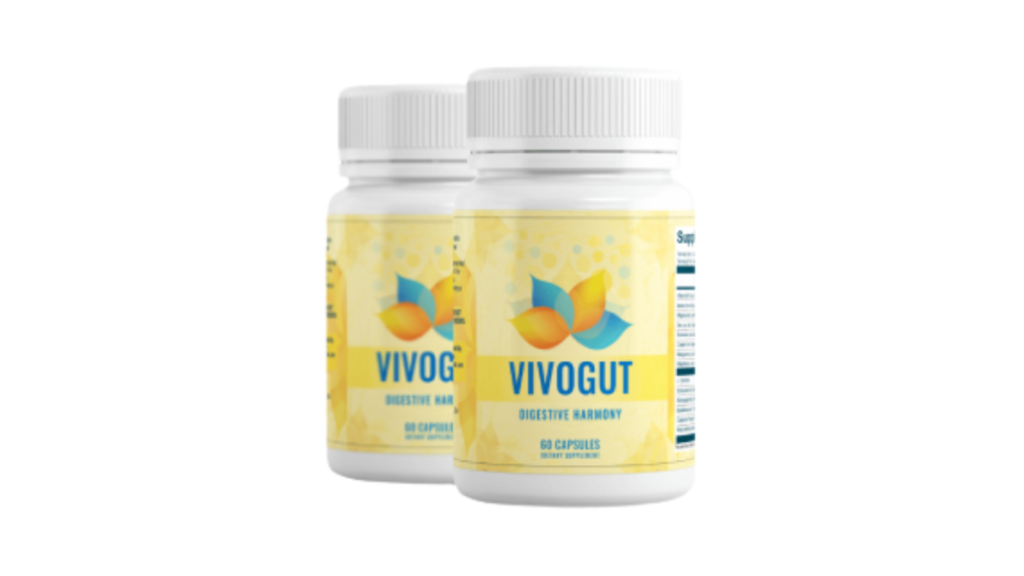
If, after weighing all of that, you still want to try it, buy only from the official VivoGut website, where the 60-day guarantee applies – not from a third-party Amazon listing, which may be counterfeit or a different formula entirely. Then do one thing before you swallow the first capsule: read the actual Supplement Facts panel and confirm exactly what’s inside, whether it contains iodine-rich seaweed, and whether it lists any probiotic strain and CFU at all.
If the label won’t tell you, that’s your answer. Save your order confirmation so the refund is easy to invoke. If what you actually want is a strain-labeled gut probiotic, a product that prints its strains, CFU at expiration, and doses is the more transparent route.
Final Verdict on VivoGut
The honest core of this VivoGut review is a product with an identity problem. It’s sold on microbiome language, but the ingredients its own pages name are mostly marine and thyroid botanicals – no strain codes, no CFU, no consistent formula, and an iodine component that’s a safety flag rather than a selling point. That doesn’t make every ingredient useless; ginger and magnesium have real, modest digestive roles.
But a gut product you can’t identify with certainty, that hides all its doses, and that quietly carries a thyroid-relevant ingredient, hasn’t earned confidence. It sits above the outright anonymous funnels we refuse to link, but well below a transparent, strain-labeled probiotic.
The fair verdict is cautious and conditional: verify the physical label first, rule out any thyroid concern with a doctor, and keep expectations at “mild, general digestive support” – not a microbiome fix. As always, “may support” is the honest ceiling, and persistent gut symptoms belong with a clinician, not a bottle.
Frequently Asked Questions
Is VivoGut actually a probiotic?
Not clearly. Despite “restore your gut flora” marketing, the ingredients most consistently listed on VivoGut’s own official pages are marine botanicals and minerals (bladderwrack, kelp, ashwagandha, magnesium), not named probiotic strains – and no page we found discloses a strain code or CFU count.
Some review pages describe a conventional probiotic blend instead, so the only reliable way to know what you’re getting is to read the physical Supplement Facts panel on your bottle.
Is VivoGut a scam?
It’s not an obvious fraud – there’s a real guarantee and named ingredients – but it shows several caution signs: contradictory formulas across its own pages, no disclosed doses or CFU, shifting review counts and manufacturer names, and marketing that doesn’t match the listed ingredients. Treat it as unverified rather than proven, and confirm the label before buying.
Can VivoGut cure bloating, IBS, or constipation?
No. No supplement cures IBS, constipation, reflux, or gut inflammation, and any page implying that is overreaching. A few ingredients (ginger, magnesium) may offer mild, temporary relief of bloating or irregularity for some people, but that’s general support, not treatment. Persistent or severe digestive symptoms need a medical evaluation.
Is VivoGut safe if I have a thyroid condition?
Be careful. Bladderwrack and kelp are iodine-rich, and excess iodine can disrupt thyroid function in either direction. If you have any thyroid condition or take thyroid medication, do not take an iodine-containing seaweed supplement like VivoGut without first talking to your doctor – especially since the iodine dose isn’t disclosed.

Raphael Albert is the founder and content creator of Nutra Plus. Passionate about health, nutrition, fitness, and wellness, he spends his time researching scientific studies, health trends, and evidence-based lifestyle strategies to create informative and easy-to-understand content. While he is not a doctor or licensed healthcare professional, his goal is to help readers make more informed wellness decisions. All content is for educational purposes only and should not replace professional medical advice. Always consult a qualified healthcare provider regarding your health concerns.