Transparency note: this site normally earns a commission when readers buy through our links. There are no purchase links in this article, and we earn nothing whatever you decide. We won’t point you toward a product whose ingredients nobody will disclose — including us.
These statements have not been evaluated by the Food and Drug Administration. This product is not intended to diagnose, treat, cure, or prevent any disease. Because no ingredient list is published, nobody outside the company can tell you whether this cream is safe for your skin, your allergies, or your medications. If you have joint pain that’s persistent, worsening, or comes with swelling, that’s a doctor or physiotherapist question, not a cream question.
Every product write-up on this site follows the same method. Find the ingredient list. Look up each ingredient. Compare the amounts against the doses used in published research. Report the gap.
That method fails completely here, and the reason is the finding.
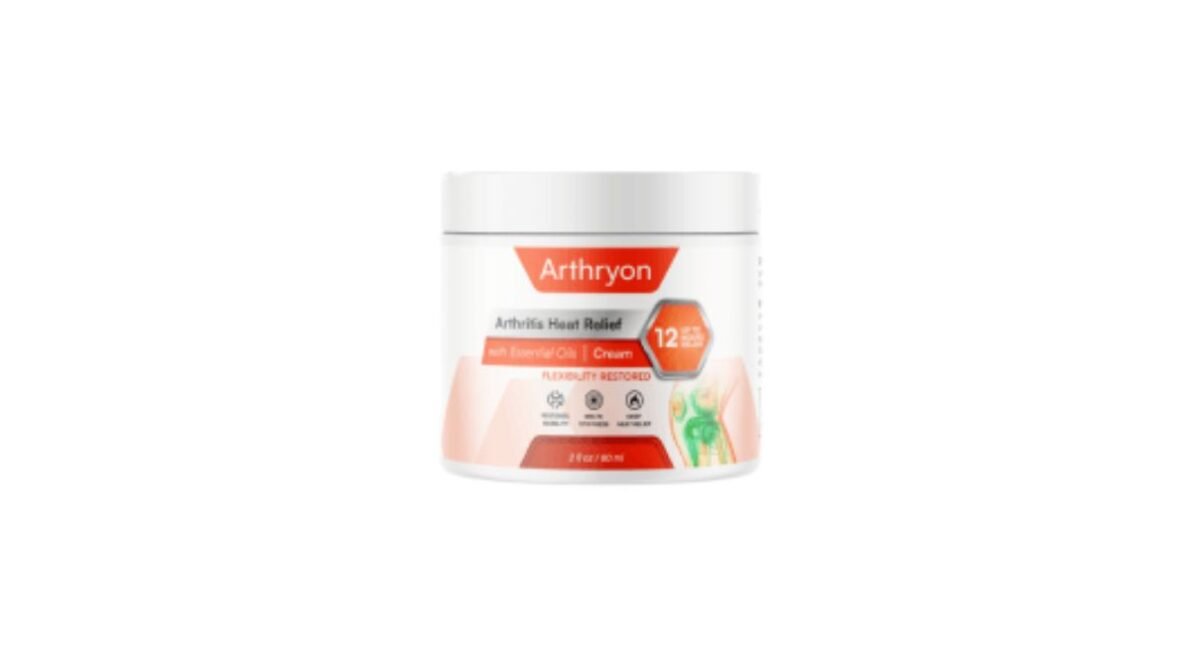
Follow the advertising for this cream and the page it delivers you to is a checkout. You land directly on package selection and a credit card form. There’s no advertorial before it, no product page behind it, and — this is the part that matters — no ingredient list anywhere on it. Not a full label. Not a partial one. Not a sentence describing the formula. You’re asked to enter your card details for a cream whose contents are never stated.
That’s a first across the products I’ve looked at. Even the ones hiding behind proprietary blends at least name the plants. This one names nothing.
So this Arthryon Heat Relief Cream review can’t tell you whether the formula is good, because nobody outside the company can. What it can do is examine everything around the formula — and there’s a great deal to examine.
Buying More Bottles Is Labelled “Max Efficiency”
Start with the pricing block, because it takes one second to check and it’s genuinely unusual.
Three packages are offered. Each carries a label:
- Buy 3 + get 2 free → “Max Efficiency”
- Buy 2 + get 1 free → “Mid Efficiency”
- Buy 2 bottles → “Lesser Effect”
Read that again. Those aren’t descriptions of formula strength — there’s only one cream. They’re descriptions of how many jars you order, presented as though the product works better when you buy more of it.
A topical cream’s effect depends on what’s in it and where you put it. It does not depend on how many unopened jars are sitting in your bathroom cabinet. Labelling the smallest package “Lesser Effect” tells a person in pain that choosing the cheaper option means choosing less relief, which isn’t a statement about the product at all.
Every other upsell structure I’ve reviewed used savings language — save $300, best value, most popular. This one uses efficacy language. That’s a meaningful step further.
Nobody Agrees on What’s In It
Since the seller doesn’t say, I went looking elsewhere. The results make the problem worse rather than better.
Across the affiliate pages promoting this cream, I found these ingredient claims:
- One lists arnica oil, eucalyptus, glucosamine and hyaluronic acid
- Another lists arnica oil, hyaluronic acid, tea tree oil and aloe vera
- A third says menthol and camphor
- A fourth says capsaicin, camphor and menthol
- A fifth openly hedges, saying the product “likely uses a counterirritant effect” and describing what such creams “often contain”
Five sources, five different formulas, and one of them admitting it’s guessing.
That last one is the honest tell. When the people paid to promote a product are describing what it probably contains, based on what products in its category usually contain, they don’t know either. They’re working from the same page you are.
This matters practically, not just philosophically. If you have an allergy — to arnica and the daisy family, to tea tree oil, to a fragrance component — you cannot check this product against it. If you have sensitive skin, broken skin, or eczema, you cannot know what you’d be putting on it. If you’re pregnant, you cannot know whether anything in it is contraindicated. Those aren’t exotic scenarios. They’re ordinary reasons people read labels.
Why a Pain Cream Normally Has a Drug Facts Panel
Here’s the regulatory context, and it’s worth understanding because it gives you a tool for every cream you’ll ever buy.
In the United States, a topical product marketed for pain relief isn’t a cosmetic — it’s an over-the-counter drug. The FDA maintains a monograph, M017, covering External Analgesic Drug Products, listing the active ingredients recognised as safe and effective for exactly this purpose: menthol at 1.25–16%, camphor above 3% up to 11%, capsaicin at 0.025–0.25%, methyl salicylate at 10–60%, and a few others.
Products sold under that monograph carry a Drug Facts panel. You’ve seen it on every tube of muscle rub in every pharmacy: a black-bordered box listing Active Ingredients with their percentages, Purpose, Uses, Warnings, and Directions. It’s standardised so you can compare products and check for interactions at a glance.
If Arthryon contains menthol, camphor, or capsaicin — as several affiliate pages claim, and as the name “Heat Relief” implies — then a Drug Facts panel is what you’d normally expect to see. I couldn’t find one on the checkout page.
I’m not a lawyer and enforcement is the FDA’s business, not mine. I don’t know what’s printed on the physical tube, which may well carry information the website doesn’t. But the practical consequence for you as a buyer is concrete: when you pick up a warming rub at a pharmacy, you can read the active ingredient and its percentage before you pay. Here, you pay first and find out later.
That’s the comparison worth holding onto, and it applies to every product in this category.
The Timer, the Notification, and the Disclaimer
Three mechanics on the page are worth naming, because once you can see them you’ll see them everywhere.
The countdown. A banner announces limited supply due to high media demand, and a timer tells you your free bottles are reserved for a set number of minutes. Reload the page and the timer starts over. It isn’t a reservation; it’s a script that restarts on every visit.
The live purchase notification. A popup announces that a named buyer from a named state just purchased seven bottles a few minutes ago. That notification sits in the page’s static template rather than arriving from a live order feed — the sample name and quantity are part of the page’s own code.
The stock warning. “Current Availability: Low. Sell Out Risk: High,” with no source, alongside a banner whose date field is generated on the fly.
None of these describe anything happening in the world. They describe a page designed to make you decide quickly, which is the opposite of what you want when you’re spending money on something whose contents you can’t verify.
What the Disclaimer Actually Admits
The small print at the foot of the page is the most informative thing on it, and I want to give the company credit for publishing it, because it’s what makes this section possible.
It states that testimonials are individual cases, that actual names and photographs of the individuals depicted have been changed, and — the line that matters most — that individuals are remunerated.
So the endorsements you see attached to this product are, by the seller’s own account, paid, and presented under names and faces that aren’t the real ones. That’s disclosed, which is the legally correct thing to do. It also means there’s nothing there for you to evaluate: you can’t look anyone up, you can’t ask them a follow-up question, and you know they were compensated.
For context on why disclosure matters here: the FTC’s Rule on the Use of Consumer Reviews and Testimonials took effect on 21 October 2024, and prohibits testimonials that misrepresent the experience of the person giving them, along with compensation conditioned on expressing a particular sentiment. Analyses of the rule note that it allows the agency to pursue civil penalties currently set at $51,744 per violation.
I’m describing the framework, not making an accusation — I have no visibility into how these particular testimonials were obtained, and the disclosure is present. What I’d say plainly is this: a paid endorsement under a changed name and a changed photograph carries no information you can act on. Read it as advertising, because that’s what the disclaimer says it is.
What Heat Creams Can and Can’t Do
Set the specific product aside for a moment, because the category question is genuinely useful and you can apply it anywhere.
Warming and cooling rubs work as counterirritants. Menthol, camphor and capsaicin stimulate nerve endings in the skin, producing a hot or cold sensation that competes with the pain signal underneath. The sensation is real, it can be genuinely comforting, and there’s nothing fraudulent about the mechanism.
What it doesn’t do is reduce inflammation in the joint, repair cartilage, or address why the joint hurts. It’s a distraction at the surface — useful, temporary, and not disease-modifying. Anyone selling a counterirritant as a solution to arthritis is describing something different from what the compound does.
For comparison, the topical class with the strongest evidence is a different one. A Cochrane review of topical NSAIDs found that roughly 60% of people with osteoarthritis got substantially reduced pain from topical diclofenac or ketoprofen, compared with about 50% on the inactive carrier — moderate-quality evidence, and enough that treatment guidelines list topical NSAIDs as an early option for knee and hand osteoarthritis, often ahead of pills because the safety profile is better.
That product costs very little, is sold in every pharmacy, and prints its active ingredient and percentage on the box.
There’s No ClickBank Here — and That Matters
This is the practical point most likely to affect your money, and it’s easy to miss.
Most direct-to-consumer supplements and creams sold this way go through a payment platform that acts as retailer of record and administers refunds independently of the vendor. If the seller stops answering emails, you still have somewhere to go.
Arthryon doesn’t work that way. The link routes through a tracking domain, and the checkout takes your card details directly on the seller’s own page. There’s no third-party retailer in the middle. That means the 30-day money-back guarantee is enforceable only through the seller — the same seller whose page doesn’t tell you what’s in the product.
Thirty days is also the shortest guarantee window I’ve encountered in this category, where 60 to 180 days is more typical.
None of that means your card details are unsafe — the checkout uses standard SSL encryption. It means the refund promise has no independent backstop, and you should size your first order accordingly.
What I Liked
The disclaimer is honest about the testimonials. Stating plainly that names and photographs were changed and that individuals are remunerated is the legally correct disclosure, and plenty of sellers bury or omit it. It’s the reason this review could tell you anything about them at all.
The FDA disclaimer is present, correctly worded, and states that the product isn’t intended to diagnose, cure or prevent disease.
Free shipping is genuinely free, shown as a real deduction rather than folded into the price.
The checkout is encrypted and support is advertised as available around the clock.
Topical delivery has a real safety advantage over oral painkillers. Whatever’s in this jar, rubbing something on a knee avoids the gastrointestinal and cardiovascular risks that come with long-term oral NSAID use — which is the same reasoning that makes topical treatment a sensible first step generally.
Things to Consider
No ingredient list anywhere on the page you buy from.
No Drug Facts panel, for a product sold on pain relief.
Package quantities labelled as efficacy levels — “Max Efficiency” for the largest, “Lesser Effect” for the smallest.
Affiliate sources contradict each other on what’s in it, and one admits it’s inferring.
A countdown that restarts on reload, and a purchase notification built into the page template.
Testimonials that are paid, with changed names and photographs, by the seller’s own disclosure.
No third-party payment platform administering the refund.
A 30-day guarantee, the shortest in this category.
Prices generated on page load rather than published, so what you’re quoted may not be what someone else is quoted.
The Review Trail
There is no reliable independent feedback on this product, and the substitute is unusually thin even by the standards of this market.
The search results are dominated by three kinds of page. Press releases distributed through a newswire service, pointing readers to yet another domain. Threads posted on unrelated forums, including a fitness board and a data-recovery board. And keyword-stuffed pages hosted in Amazon S3 storage buckets, where the same product name is repeated dozens of times in sentences that barely parse — a search-engine technique, not writing anyone intended a human to read.
There is a Trustpilot listing, but it belongs to a subdomain of a different site rather than the seller’s own domain, and it carries a single review, which discusses shipping speed and a helpful staff member rather than the cream itself.
One affiliate page claims to have gathered verified reviews from the Better Business Bureau, Consumer Reports, Reddit and Quora. That’s a standard construction in this market and I’d treat it as unverified.
Read all of it as advertising.
Price, Guarantee, and What to Screenshot
Pricing appears on the seller’s page rather than in this article, and deliberately so: the figures are generated when the page loads rather than published as fixed prices, so what you see may differ from what someone else sees. Check them yourself, and note that the “retail” figure struck through beside them is a reference price, not evidence of what anyone has paid.
You’ll also notice there’s no link to buy here. This site usually earns a commission when readers purchase through our links, and on most products we’re content with that — you get an honest account, and you decide. We couldn’t do that here. We can’t tell you whether this cream is safe for your skin, your allergies, or your medications, because the seller doesn’t say what’s in it. Recommending a purchase we couldn’t verify ourselves would be asking you to trust us about something we don’t know.
If you decide to order anyway, four protections are worth taking:
Screenshot the page you purchase from, including the price, the package, and the guarantee wording, on the day you pay.
Buy the smallest package. With a 30-day window and no third-party refund administration, a large first order is the wrong risk.
Diarise day 20, not day 30. Refund conversations take time.
Patch test before you use it properly. Apply a small amount to your inner forearm and wait 24 hours. That’s sensible with any new topical, and it’s the only safety check available to you when the ingredients aren’t disclosed.
Final Verdict
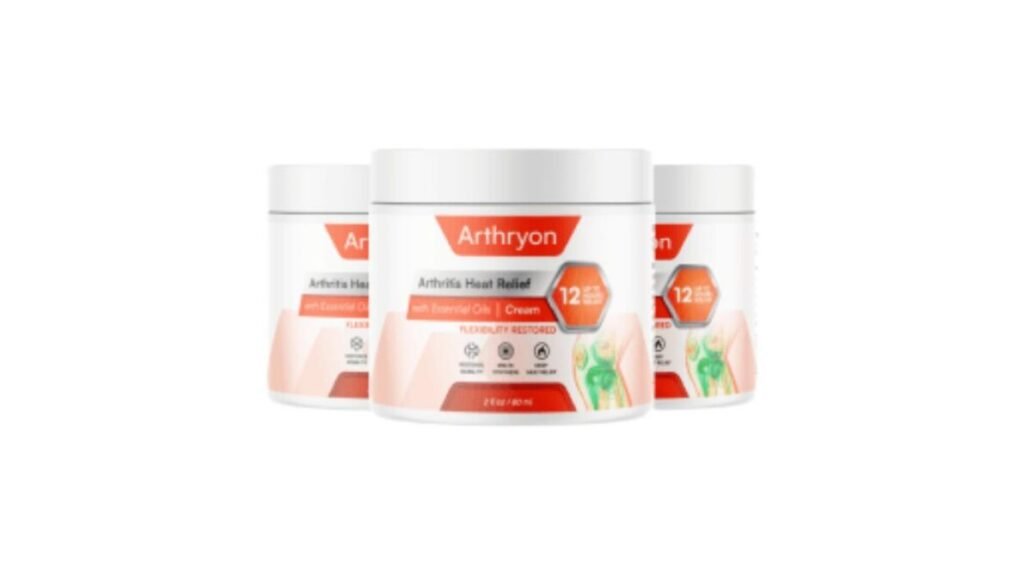
I can’t recommend a product whose contents I’m not allowed to see, and I don’t think anyone should buy one.
That’s not a judgment about the cream, which may well be a perfectly ordinary counterirritant rub that feels pleasant on a sore knee. It’s a judgment about the transaction. You’re being asked to enter your card details, under a countdown that resets when you reload, for a product with no ingredient list, no Drug Facts panel, testimonials the seller states are paid and pseudonymous, a 30-day guarantee with no independent administrator, and package tiers that describe buying more as working better.
Any one of those would be a caution. Together they describe a purchase where you carry all of the uncertainty.
What I’d do instead, and it costs less: walk into a pharmacy. If you want warmth, a menthol or capsaicin rub sits on the shelf with its active ingredient and percentage printed on the box, for a few dollars. If your problem is knee or hand osteoarthritis, ask the pharmacist about topical diclofenac gel — it’s the option with Cochrane-level evidence behind it, it’s inexpensive, and guidelines list it as an early choice. Either way you’ll know what you’re putting on your skin.
And the unglamorous part that beats every jar: strength work around the affected joint, weight management where it applies, and a physiotherapist who can tell you which of those fits your particular problem. Persistent or worsening joint pain, swelling, redness or fever needs proper assessment rather than a cream.
If you’re comparing topical joint products, our Balmorex Pro review covers another cream in this category — one that at least names its ingredients — and the questions from this article carry over: does the page publish a Drug Facts panel, and does it tell you what you’re putting on your skin before you pay?
Frequently Asked Questions
What’s actually in Arthryon Heat Relief Cream?
The checkout page doesn’t say, and I couldn’t find an official ingredient list anywhere. Affiliate pages promoting it give at least four different and mutually inconsistent formulas, and one of them openly describes what creams in this category “often contain” rather than what this one does. If you have allergies or sensitive skin, that absence is a practical problem, not a technicality.
Are the customer testimonials real people?
By the seller’s own disclaimer, the names and photographs shown have been changed, and the individuals are remunerated. That disclosure is the legally correct thing to publish. It also means there’s nothing in those endorsements you can verify or act on — read them as advertising.
Is the 30-day guarantee reliable?
It’s the shortest window I’ve seen in this category, and unlike most products sold this way there’s no third-party payment platform administering it, so enforcement depends entirely on the seller. If you order, buy the smallest package, screenshot the guarantee wording on the day you pay, and start any refund conversation well inside the window.
Do warming creams help arthritis?
They can make it feel better temporarily. Menthol, camphor and capsaicin work as counterirritants — they create a sensation that competes with the pain signal. That’s genuine comfort, but it doesn’t reduce joint inflammation or change the underlying condition. For knee or hand osteoarthritis specifically, topical NSAIDs have considerably stronger evidence, and a pharmacist can tell you whether they suit you.

Raphael Albert is the founder and content creator of Nutra Pulse. Passionate about health, nutrition, fitness, and wellness, he spends his time researching scientific studies, health trends, and evidence-based lifestyle strategies to create informative and easy-to-understand content. While he is not a doctor or licensed healthcare professional, his goal is to help readers make more informed wellness decisions. All content is for educational purposes only and should not replace professional medical advice. Always consult a qualified healthcare provider regarding your health concerns.