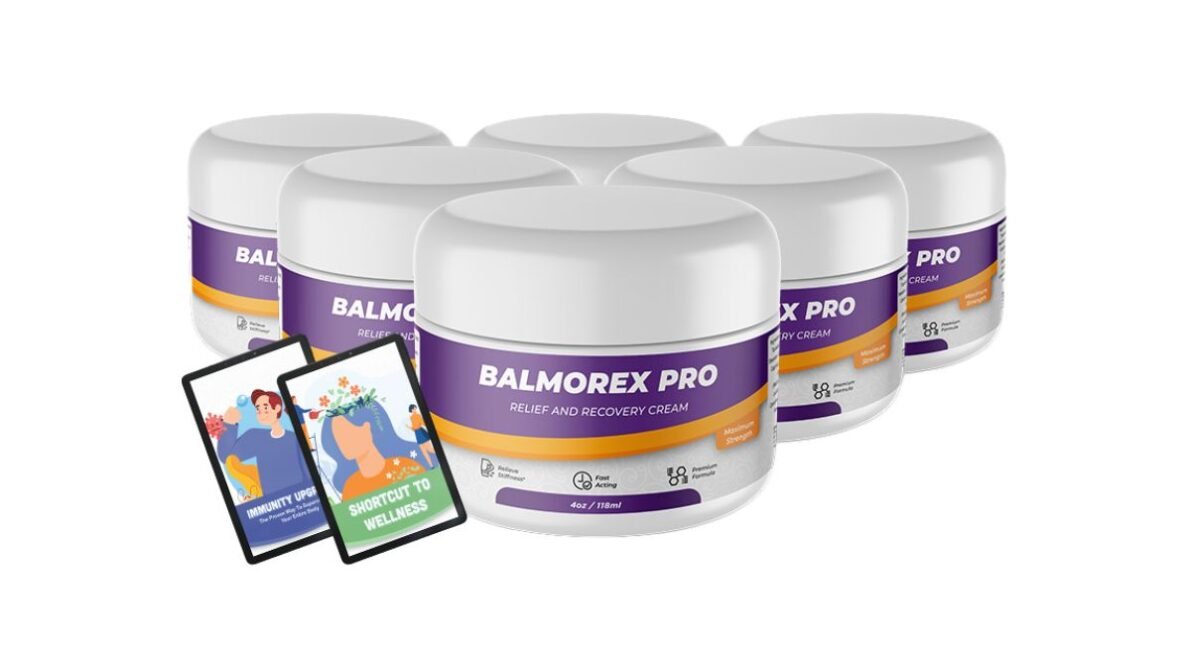
Full disclosure before we start: a couple of links below go to the seller and pay this site a commission on a sale. You’ll find a section further down pointing you toward a pharmacy product that costs a fraction of the price. Draw your own conclusions about how much that commission shaped things.
These statements have not been evaluated by the Food and Drug Administration. This product is not intended to diagnose, treat, cure, or prevent any disease. Joint and back pain have many causes, and some of them need imaging or bloodwork rather than a cream. Persistent pain, swelling, or loss of function is a reason to see a doctor or physiotherapist, not a reason to buy a jar of anything.
Before we get anywhere near the product, one question decides everything about topical joint creams: can something you rub on your skin actually reach the joint underneath?
The honest answer is yes — sometimes. Skin is a barrier, not a wall, and a handful of compounds genuinely cross it in useful amounts. Topical diclofenac reaches concentrations in knee synovial tissue ten to twenty times higher than in blood plasma. That isn’t marketing; it’s measured in surgical tissue samples. A Cochrane review of topical NSAIDs found that around 60% of people with osteoarthritis got substantially reduced pain from topical diclofenac or ketoprofen, compared with about 50% on the inactive carrier — moderate-quality evidence, and enough that international guidelines list topical NSAIDs as an early option for knee and hand osteoarthritis, often ahead of pills because the safety profile is better.
So topicals can work. That’s the standard, and it’s a fair one to hold any cream to.
Which is what makes this Balmorex Pro review a slightly frustrating exercise. The jar contains ingredients with genuine research behind them. The trouble is that most of that research involves swallowing them.
What Balmorex Pro Is
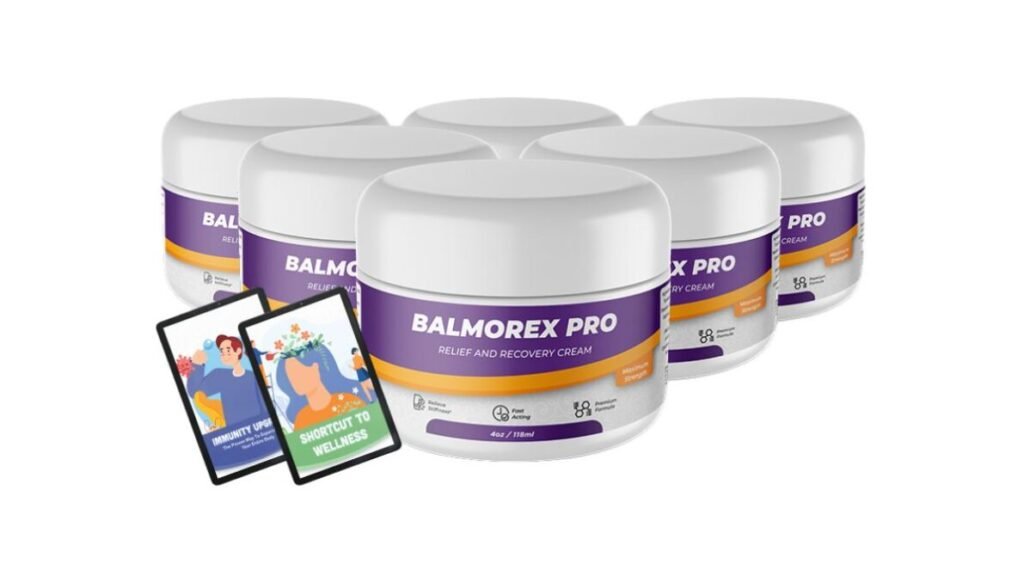
Balmorex Pro is a cream, sold in jars through the Balmorex Pro official website with ClickBank handling payment. It’s marketed as a “27-in-1” formula for joints, back, and muscles — deep-penetrating, non-greasy, fast-acting.
Eight of those twenty-seven ingredients are actually named on the page: MSM, arnica oil, hemp seed oil, Indian frankincense (boswellia), aloe vera, Epsom salt, shea butter, and ginger root. The other nineteen aren’t listed anywhere I could find, and no ingredient concentrations are published for any of them.
That last point matters more for a cream than for a capsule, because with topicals the concentration is the mechanism. Skin penetration depends on how much of a compound sits against the surface and for how long. A formula with twenty-seven ingredients and no percentages is asking you to trust that the two or three that might do something are present at meaningful strength rather than as label decoration.
The Regulatory Question Worth Asking
Here’s something you won’t find in any other write-up of this product, and it’s worth understanding because it explains a lot.
In the United States, a topical product marketed for pain relief isn’t a cosmetic — it’s a drug. The FDA maintains an over-the-counter monograph, M017, covering External Analgesic Drug Products, which lists the active ingredients recognised as safe and effective for exactly this purpose: methyl salicylate at 10–60%, camphor above 3% up to 11%, menthol at 1.25–16%, capsaicin at 0.025–0.25%, plus a few others. Those are the compounds with an official green light for temporarily relieving minor aches of muscles and joints.
Not one of Balmorex Pro’s eight named ingredients appears on that list.
I’m not a lawyer and I’m not going to tell you the company is breaking a rule — I don’t know what’s in the nineteen unnamed ingredients, and enforcement is the FDA’s business, not mine. But the practical consequence for you as a buyer is concrete. When you pick up a tube of Bengay or a generic menthol gel, an expert panel has reviewed the active ingredient and concluded it does something. Balmorex Pro sits outside that framework while its sales page carries testimonials about chronic pain disappearing. You’re being sold on drug-style outcomes by a product with no drug-recognised active.
Worth noticing too: the same page states that names and identifying details in its testimonials have been changed. Which means those three glowing first-name endorsements — including one declaring a pain-free life — can’t be traced or verified by anyone, including me.
Arnica: The One Ingredient With Real Topical Evidence
Credit where it’s genuinely due, because this is the ingredient that belongs in a joint cream.
Arnica montana has been tested head-to-head against a pharmaceutical. A randomised, double-blind trial in 204 patients with radiologically confirmed hand osteoarthritis compared arnica gel against 5% ibuprofen gel over 21 days and found no difference between them in pain relief or hand function, across primary and secondary endpoints alike. Adverse events were slightly lower in the arnica group. A separate multicentre trial in knee osteoarthritis found significant improvements in WOMAC pain, stiffness, and function scores, though without a placebo arm, which limits what you can conclude.
That’s a real result from a properly designed study. Topical arnica is not folk nonsense.
Now the catch, and it’s the same shape as every other catch in this review. The arnica gel in that trial was 50 grams of fresh herbal tincture per 100 grams of gel — a 50% preparation. Arnica was the formula. In Balmorex Pro, arnica oil is one of twenty-seven ingredients at an undisclosed concentration. If it’s present at 2%, the trial evidence doesn’t transfer. If it’s present at 40%, it might. There’s no way to know, and that uncertainty is the product’s choice, not an accident of nature.
MSM and Boswellia: Real Evidence, Wrong Route
These two are the formula’s headline scientific credentials, and this is where the delivery method becomes the whole story.
Boswellia — Indian frankincense — has legitimately good data for knee osteoarthritis. A meta-analysis of thirteen randomised trials covering more than two thousand patient outcomes found significant benefit for pain, stiffness, and joint function. Trials typically use standardised extracts at 150 to 300 milligrams twice daily, taken by mouth, for 90 days or more.
MSM is more modest but real. Trials have used 3 grams twice daily or 5 grams daily, orally. A meta-analysis pooling MSM and DMSO trials found a reduction in pain that didn’t reach statistical significance — two of three included studies showed statistically significant but not clinically meaningful improvement. Encouraging direction, weak magnitude.
Read those numbers again and the problem announces itself. Grams. Hundreds of milligrams. Daily. Swallowed. For months.
Boswellic acids are large triterpene molecules — precisely the kind of bulky compound that penetrates skin poorly. And even setting chemistry aside, delivering a gram of MSM through the skin from a thin layer of cream applied to a knee is not a realistic proposition. The evidence these ingredients carry is oral evidence. Putting them in a cream borrows their scientific reputation without inheriting their results.
This isn’t a criticism of the ingredients. Boswellia and MSM are reasonable things to take for joint discomfort. They’re just reasonable things to take, and this is a jar you rub on.
Epsom Salt and the Transdermal Magnesium Question
Epsom salt is magnesium sulfate, and its presence rests entirely on the idea that magnesium absorbs through skin. That idea is contested enough to deserve a straight answer.
The most-cited review of the topic, published in Nutrients in 2017, concluded that widespread claims about transdermal magnesium are not scientifically supported — the studies are few, small, and methodologically limited. More recent laboratory work has been more nuanced: magnesium ions can cross the outer skin layer, mainly through hair follicles, with penetration increasing at higher concentrations and longer exposure. So it isn’t zero.
But hair follicles account for roughly 0.1 to 1% of total skin surface area. Whatever gets through by that route is a rounding error compared with swallowing a magnesium tablet. The fair summary is that a small amount may cross under favourable conditions, and there’s no good evidence the quantity matters clinically.
Epsom salt in a cream is a familiar, comforting name on an ingredient list. It’s not a delivery system.
Hemp Seed Oil Is Not CBD
This one is genuinely important and it’s the reason I’d want a friend to read this section specifically.
A lot of people see “hemp” on a pain cream and think CBD. They are not the same thing. CBD is extracted from the flowers and leaves of the cannabis plant. Hemp seed oil is pressed from the seeds, which contain essentially no cannabinoids at all. It’s a pleasant emollient with a good omega-3 to omega-6 ratio — a moisturiser, nutritionally respectable, with no cannabinoid activity and no analgesic mechanism.
Whether the overlap in wording is deliberate here, I can’t say. But if part of the appeal of this jar is a vague sense that you’re getting something cannabis-derived for your knee, you are not. And it’s worth noting that Balmorex Pro’s own reference page cites a WebMD article about hemp seed oil rather than any research connecting it to joint pain.
The remaining named ingredients — aloe vera, shea butter, and ginger root — are in a similar position. Aloe and shea are decent emollients that will leave your skin softer. Ginger has some modest oral evidence for osteoarthritis and very little topical evidence. None of them is objectionable. None is doing what the marketing implies.
What I Liked
The ingredient choices aren’t random. Arnica, boswellia, MSM, ginger — someone looked up which botanicals have joint research behind them. That’s more thought than most creams in this price bracket show.
Arnica is a legitimately good inclusion. It’s the one ingredient here with head-to-head trial evidence against a pharmaceutical topical, and it earned that on merit.
Topical delivery has a real safety advantage. Whatever else is true, rubbing something on your knee avoids the gastrointestinal and cardiovascular risks that come with long-term oral NSAID use. For an older adult already on several medications, that’s not a trivial benefit — it’s the same logic that makes topical diclofenac a first-line option.
No subscription trap. One-time payment, explicitly stated, with no auto-renewal. In this market that’s worth acknowledging.
The emollient base will do something pleasant. Shea butter, aloe, and hemp seed oil make a decent moisturiser, and the act of massaging cream into a sore joint has a genuine, if modest, comfort effect of its own.
Things to Consider
No concentrations for anything. For a topical, this is the central flaw. Penetration is concentration-dependent, so an undisclosed percentage is an undisclosed mechanism.
Nineteen of twenty-seven ingredients are never named.
No FDA-monograph analgesic active. No menthol, camphor, capsaicin, or methyl salicylate — the compounds with recognised evidence for exactly this use.
The best-evidenced ingredients work orally. Boswellia and MSM carry gram-scale oral evidence that a cream can’t reproduce.
Testimonials are unverifiable by the company’s own admission. Names and identifying details changed, per the site’s fine print.
“Incredible results in RECORD TIME” is a claim no ingredient on the list supports.
Refunds require shipping the jar back. At your expense, to Florida — and the address varies depending on which page you read.
Reading Balmorex Pro’s Own Reference Page
The site has a references page headed with an emphatic assurance that the product is backed by science. I went through it.
It contains nineteen entries, and every single one is a bare URL. No titles, no authors, no journals, no years. You cannot tell what any of them are without clicking through one at a time — which is a strange way to present evidence you want people to check.
Of the nineteen, one link appears twice, duplicated. Three aren’t research at all: a WebMD article on hemp seed oil, a Healthline listicle about foods for arthritis, and a blog post from a commercial hemp company about sunflower oil. The remainder are PubMed and PMC links which may well be perfectly good papers — but presented this way, they function as a wall of blue text designed to look like rigour rather than to be read.
Compare that with how the arnica trial or the boswellia meta-analysis are cited in this article: author, year, journal, sample size, result. That’s what a reference is for. A list of unlabelled URLs, three of which lead to consumer websites and a vendor blog, tells you something about how seriously the evidence claim is meant to be taken.
Who Should Be Careful With This
Anyone allergic to the daisy family. Arnica is an Asteraceae plant, alongside ragweed, chrysanthemum, marigold, and echinacea. If those cause you trouble, this cream may too.
Never apply arnica to broken skin. Cuts, open wounds, ulcers, or eczema — absorption rises sharply through compromised skin, and arnica is toxic if it gets into the body in quantity. Which leads to the next point.
Arnica must never be swallowed. It’s genuinely poisonous taken internally. Keep the jar well away from children, and wash your hands after applying.
Patch test first. Apply a small amount to your inner forearm and wait 24 hours. Topical botanical formulas cause contact dermatitis more often than you’d expect, and a 27-ingredient blend gives you more chances to react.
Pregnant or breastfeeding? Topical arnica isn’t recommended, and there’s no safety data for this combination.
Anyone on blood thinners should mention it. Arnica has been associated with bleeding risk, and while the topical risk is likely low, undisclosed concentrations are exactly why you flag it rather than assume.
And the important one: joint pain that’s getting worse, waking you at night, causing visible swelling or redness, or coming with fever needs medical assessment. So does back pain with numbness, tingling, weakness, or any change in bladder or bowel control — that last combination is an emergency. No cream is the answer to those.
Price, Refunds, and What Independent Reviews Show
Pricing runs $79 per jar for two, $59 each for three, and $49 each for six, with free US shipping on the larger bundles and a 60-day money-back guarantee. Current pricing is on the Balmorex Pro site.
Do the arithmetic on the entry price: $79 a jar is roughly $2.60 a day. A 100-gram tube of over-the-counter diclofenac gel — the product with the Cochrane evidence I opened this article with — costs somewhere between $15 and $25 at most pharmacies. A tube of menthol gel costs less than a coffee.
The refund is where I’d urge caution. It requires physically returning the product to Florida at your own cost, and the return address differs between the official page and various affiliate write-ups. Screenshot the terms and confirm the current address with support in writing before you send anything.
As for independent reviews: there aren’t any. The product is sold direct only, so no verified-purchase pool exists. What fills the search results is affiliate content, much of it distributed through newswire services, that contradicts itself in ways worth noting. Several pages claim to have aggregated “verified reviews” from Amazon, Walmart, BBB, Trustpilot, Consumer Reports, and Reddit — while the same pages state the product isn’t sold on Amazon or Walmart. One reports a 4.7 rating from 433 reviews without saying where those reviews live. At least one openly labels itself a paid advertorial. And the product doesn’t appear to be listed with the Better Business Bureau, which means there’s no centralised complaint record either way.
Treat every Balmorex Pro testimonial you encounter as unverified. That includes the negative ones.
Final Verdict
Balmorex Pro is a well-intentioned formula built on a category error.
The ingredients were chosen by someone who read the joint literature. Arnica belongs in a topical and has the trial data to prove it. Boswellia and MSM have real evidence too — from being swallowed in gram quantities, which is not what this product does. The emollient base is nice. The safety advantage of avoiding oral NSAIDs is real.
But you can’t verify a single concentration, nineteen ingredients are unnamed, there’s no monograph-recognised analgesic active, and the price is three to five times a pharmacy topical with substantially better evidence behind it.
Who it may reasonably suit: someone who has already tried topical NSAIDs and either didn’t tolerate them or didn’t like them, who prefers a botanical approach, who has no daisy-family allergy, who’s willing to patch test, and who understands they’re buying a botanical emollient rather than an analgesic. If that’s you, buy two jars rather than six and keep the receipt.
What I’d actually suggest first: ask a pharmacist about OTC diclofenac gel for a knee or hand. It’s inexpensive, guideline-recommended, and has the strongest evidence of anything discussed here. If you want a botanical route, a dedicated high-concentration arnica gel gets you the one ingredient with genuine topical support, at a stated strength, for less money.
And if boswellia and MSM are what drew you in, those are worth taking orally, because that’s where their trial evidence lives. The contrast with an oral formula is instructive here. The product covered in our Joint Genesis review publishes per-ingredient amounts on its label — roughly 80 mg of a branded hyaluronan complex, boswellia in the region of 100 mg — figures that come from the manufacturer rather than independent laboratory testing. Whether those particular amounts are enough is a separate question, and one I take up in that review rather than here. But you can look them up and hold them against the published trials. With Balmorex Pro you can’t check a single number, and that difference is this entire review compressed into one line.
The part that beats every jar and capsule in this article: strength work around the affected joint, weight management if it applies, and a physiotherapist who can tell you which of those actually fits your problem. Unglamorous, and better supported than anything you can rub on.
Frequently Asked Questions
Does Balmorex Pro actually relieve pain?
There’s no published trial on this formula, so nobody can answer that from evidence. What can be said: it contains no FDA-monograph analgesic active ingredient, its best-evidenced components work orally rather than topically, and arnica — the one ingredient with real topical trial data — is present at an undisclosed concentration. Massaging any cream into a sore joint provides some genuine comfort. Whether this jar does more than that is untested.
How long before I’d know if it works?
The arnica trial ran 21 days, so three weeks is a reasonable test window. That fits inside the 60-day guarantee — but remember you have to ship the product back, so start the return process well before day 60 rather than on it.
Is it safe to use with other pain relievers?
The company says yes, and for a botanical topical that’s plausible. Still mention it to your pharmacist if you take blood thinners, and never apply it over broken skin.
What’s the cheaper alternative with better evidence?
Over-the-counter topical diclofenac gel for knee or hand osteoarthritis. Cochrane-level evidence, guideline-recommended as an early option, and typically $15 to $25 for a 100-gram tube. Ask a pharmacist whether it suits you, particularly if you have kidney issues, ulcer history, or take other NSAIDs.

Raphael Albert is the founder and content creator of Nutra Pulse. Passionate about health, nutrition, fitness, and wellness, he spends his time researching scientific studies, health trends, and evidence-based lifestyle strategies to create informative and easy-to-understand content. While he is not a doctor or licensed healthcare professional, his goal is to help readers make more informed wellness decisions. All content is for educational purposes only and should not replace professional medical advice. Always consult a qualified healthcare provider regarding your health concerns.