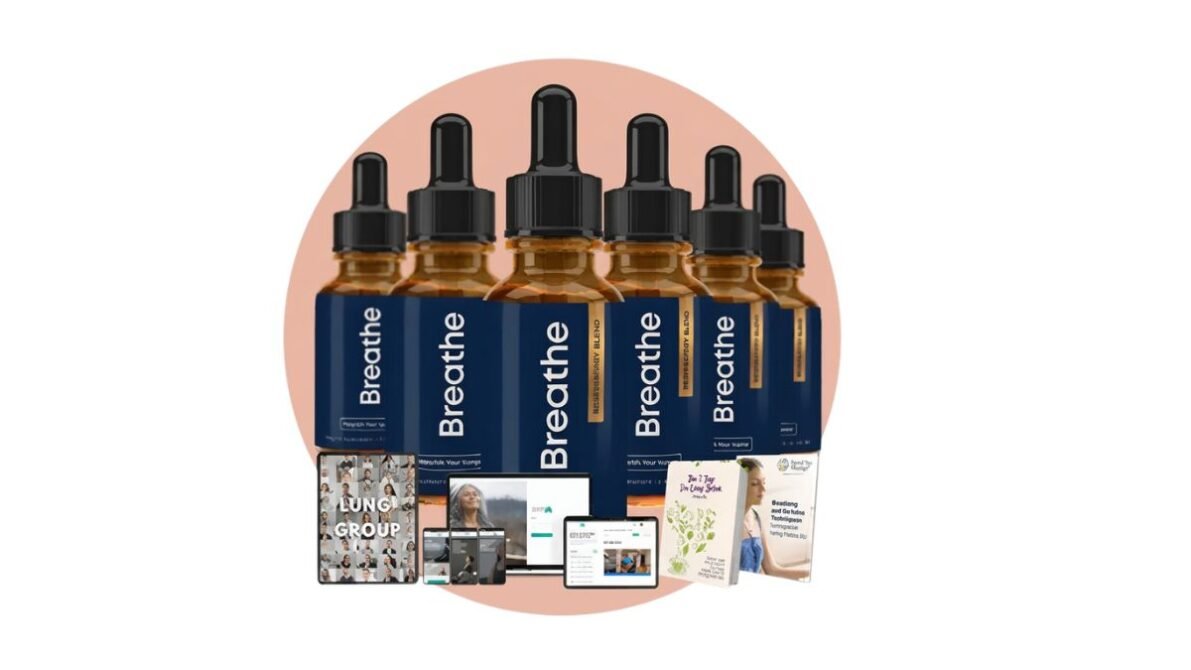
Full transparency: this article has no affiliate link, and the “Red Flags” and “Where to Buy” sections below explain exactly why we chose not to add one. When we do link a product, we may earn a commission at no cost to you — here we didn’t, on purpose.
These statements have not been evaluated by the Food and Drug Administration. This product is not intended to diagnose, treat, cure, or prevent any disease. COPD, asthma, and bronchiectasis are serious medical conditions — a herbal tincture is not a treatment for any of them, and nothing here replaces care from your own clinician.
New to spotting supplement marketing tricks? Before you weigh any lung tincture, our how to spot a fake or low-quality supplement review breaks down the exact playbook — manufactured urgency, borrowed authority, and testimonials that don’t survive a second look. This Breathe review is a live case study in all three.
Breathe Lung Supplement Review: The Short Version
Breathe’s core problem isn’t its ingredients — it’s who’s supposedly endorsing them. The herbs inside the bottle are real and traditionally used for the airways, but the marketing collapses under the lightest scrutiny: the “respiratory therapist” whose name sells this product has publicly said she has nothing to do with it.
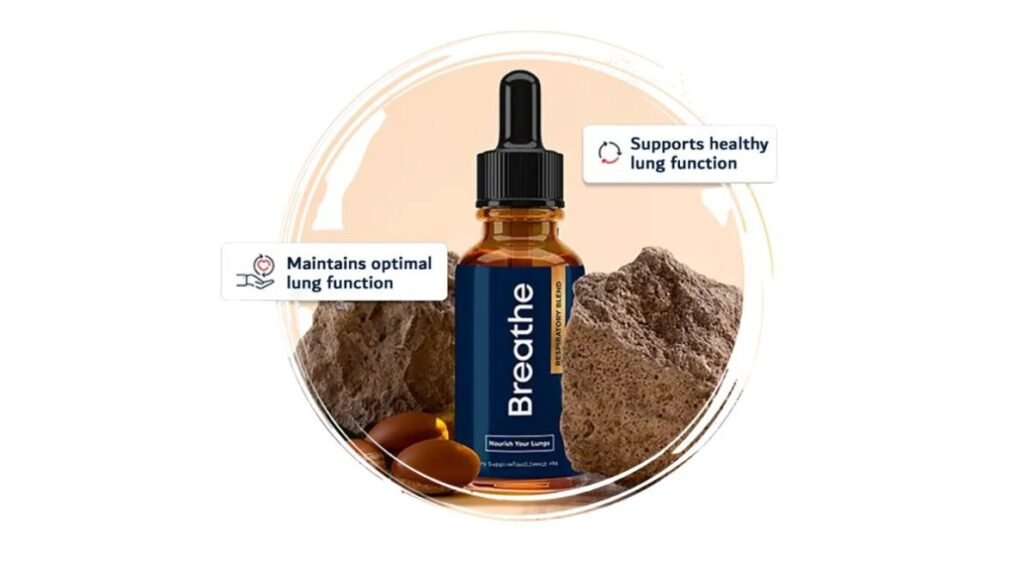
Breathe (sold through lungreset.com and a rotating cast of near-identical sites) is a liquid tincture of mullein, elderberry, and peppermint pitched as a “7-second mucus-melting ritual” that can “detox your lungs” and “reverse lung damage.” The ingredients are plausible throat-and-cough soothers with modest traditional evidence. The claims wrapped around them are not.
Read this part even if you skip the rest: if you have COPD, asthma, bronchiectasis, or any diagnosed lung condition, or you’re experiencing new or worsening shortness of breath, that’s a conversation with a pulmonologist — not a dropper bottle. Sudden severe breathlessness, chest pain, blue lips, or coughing up blood is an emergency. Call for help, don’t reach for a tincture.
The Name on the Label: A Real Therapist Who Says She Never Endorsed It
This is the finding that reframes everything else. The ads and sales pages credit the formula to Elizabeth Moffett, RRT — presented as a “leading Kentucky respiratory therapist” and author of best-selling books on lung health. Here’s the thing: that person is real.
There genuinely is an Elizabeth Moffett, a Registered Respiratory Therapist with a 17-year clinical career, real published books on pulmonary rehab and COPD (Conquering COPD, Breathe Better, The Breath of Life), a working YouTube channel, and a legitimate professional footprint. In almost every scam we audit, the “expert” is invented. This time she isn’t.
Which makes what happened worse, not better. According to a 2025 investigation into the “7-second mucus ritual” ads, the real Elizabeth Moffett has publicly stated she has no connection to Breathe or lungreset.com. The promotional videos naming her appear to be AI-generated and scripted; the “endorsement” is an impersonation.
Her real work sells breathing rehab books and advises a breathing-trainer device — not a ClickBank tincture. So the single strongest “trust signal” on the page isn’t fabricated authority in the usual sense; it’s a real professional’s identity used without her, which is a red flag of a different and heavier kind.
What’s Actually Inside Breathe
Breathe is a liquid tincture, dosed at roughly 1–3 droppers (about 2–3 ml) two to three times daily, held under the tongue and then swallowed. The core formula, where the pages agree at all, is three herbs:
- Mullein leaf (Verbascum thapsus) — the headline ingredient, a traditional cough and airway herb.
- Elderberry (Sambucus nigra) — an immune/antiviral berry extract.
- Peppermint / Mentha — menthol for a cooling, “easier-breathing” sensation.
Depending on which “official” page you land on, that list grows to include thyme, ginger root, lemon peel, manuka honey, and sometimes plantain leaf, licorice, eucalyptus, NAC, quercetin, or bromelain. No page we reviewed publishes a full Supplement Facts panel with per-ingredient milligram amounts. You’re told the herbs; you’re never told the doses.
Can Drops Under Your Tongue Actually Reach Your Lungs?
Before asking whether the herbs work, ask the blunter question we ask of every unusual delivery route: can a swallowed liquid physically reach the tissue it’s sold to fix? Unlike a tooth-enamel or nail claim — where the target has no blood supply and the route is anatomically hopeless — an oral or sublingual respiratory product isn’t physically impossible.
Compounds absorbed under the tongue or through the gut enter the bloodstream and can have systemic anti-inflammatory or immune effects, and anything that soothes the throat is contacting the upper airway directly.
But — and this is where the pitch overreaches — nothing you swallow “washes,” “detoxes,” or “melts mucus out of” your lungs. No dropper of tincture travels down into the bronchi and alveoli to scrub them. Your lungs clear mucus through the mucociliary escalator (tiny hair-like cilia sweeping it upward) and coughing, not through anything a drink can rinse.
So the plausible mechanism here is mild, indirect, and systemic — soothing a cough, thinning secretions a little, supporting immune function. The advertised mechanism — a ritual that dissolves years of lung gunk in seconds — is physiology fiction.
Mullein: Real Tradition, Thin Clinical Proof
Mullein is the ingredient doing the heavy lifting in the branding, so it deserves an honest grade. Its active compounds — saponins (natural expectorants), flavonoids (anti-inflammatory antioxidants), and mucilage (a soothing gel that coats irritated tissue) — give it a plausible mechanism for easing coughs and loosening mucus. That’s why it’s shown up in herbal cough remedies for centuries.
What it doesn’t have is strong human proof. The European Medicines Agency recognizes mullein flower as a traditional-use herbal product for sore throat associated with dry cough — explicitly noting there are no clinical efficacy studies behind it, only long-standing use.
And note the plant-part detail: the monograph is for the flower, while supplements like Breathe typically use the leaf, which has even less formal backing. Evidence grade: preliminary / traditional. Genuinely soothing for some coughs; not a proven treatment for any lung disease.
Elderberry: Moderate Evidence — For the Wrong Job
Elderberry has the best science of the three, but it points at colds and immunity, not at “lung detox.” A 2021 systematic review of five randomized trials found elderberry can modestly shorten upper-respiratory cold symptoms; the strongest single study, in air travelers, cut cold duration by roughly two days. But for influenza the picture is genuinely mixed — a rigorous randomized ER trial found no benefit at all over placebo. Lab work also shows elderberry flavonoids can block viruses from entering cells in vitro, per a 2023 antiviral study.
The honest read: elderberry may help you weather a cold a little faster and supports immune function — a reasonable thing to want. It does nothing documented for COPD, asthma, chronic mucus, or “clearing airways,” which is exactly what Breathe is sold for. Evidence grade: moderate, but for a different target than the marketing.
The Red Flags: Nearly the Full Deck
We expose product red flags honestly because it’s what protects readers and, frankly, us. Breathe carries an unusually complete set:
- Impersonated expert: a real RRT’s name and likeness used in what appear to be AI-generated videos she has disavowed.
- Conspiracy framing: “the pharmaceutical industry is hiding this / trying to shut us down” — a standard trust-bypass device, not a fact.
- Fake urgency: countdown timers that reset on refresh, and “Verified by SaleVerify” purchase pop-ups simulating live buyers.
- Unsupported hyper-specific claims: “clear 2.6 lbs of mucus,” “96% of users…,” “reverse lung damage” — precise-sounding numbers with no cited source.
- Recycled funnel template: some “official” Breathe pages still contain leftover copy from unrelated products (one literally reads “FitSpresso ensures safety and efficacy”), a tell-tale sign of a mass-produced marketing mold.
- Multi-domain confusion: a dozen-plus “official” Breathe sites, each with a different ingredient list, price, and guarantee (30-day here, 90-day there, 180-day elsewhere). When the formula, price, and maker all change depending on which tab you open, there’s no single accountable product to stand behind.
What Real Users Are Saying
Given the AI-generated testimonial problem already documented above, the sellers’ own five-star reviews can’t be treated as evidence, so we looked elsewhere), the traceable feedback is thin and mixed. On a patient forum, people with bronchiectasis who encountered the infomercial were mostly skeptical — one longtime member noted the likeliest benefit is “the placebo effect, which might not be a bad thing,” while enjoying manuka honey and mullein tea for throat comfort without expecting them to fix a lung condition.
That’s about the fairest summary available: some people find the herbs soothing for a cough or throat; no verifiable buyer reports the dramatic “airway reset” the ads promise. Treat any glowing on-site testimonial here with extra suspicion.
Medication Interactions & Safety
The individual herbs are generally recognized as safe for most healthy adults, but a few cautions are real. Elderberry can mildly stimulate the immune system, so anyone on immunosuppressants should ask a doctor first. Both elderberry and some of the rotating add-ins can interact with blood thinners. Peppermint can worsen reflux in some people.
And because the doses aren’t disclosed and the formula shifts by domain, you can’t actually tell your pharmacist what you’re taking — which is its own safety problem. If you’re pregnant, nursing, immunocompromised, or on prescription medication, clear it with a clinician before starting. None of this makes the herbs dangerous; the disclosure gap makes them impossible to fully vet.
When to See a Doctor, Not a Dropper
This matters more than any ingredient grade above. Breathe is marketed straight at people with COPD, asthma, and chronic bronchitis — the exact audience most at risk if a supplement pitch delays real care. Herbal soothers do not treat these diseases, and “detox your lungs” language can lull someone into skipping the pulmonologist. Seek prompt medical care — not a tincture — if you have:
- Sudden or severe shortness of breath, or breathlessness at rest
- Chest pain or tightness, blue-tinged lips or fingertips
- Coughing up blood, or thick discolored mucus with fever
- A known lung condition (COPD, asthma, bronchiectasis) that’s flaring or changing
- Wheezing or a cough that’s new, persistent, or getting worse
Where to Buy — and Why We’re Not Linking It
We normally point readers to a verified official source. We’re not doing that here, and the reason is the review itself, not a preference. Breathe fails the basic bar we’d need to send anyone to checkout: a real professional’s endorsement appears to be impersonated and has been disavowed; no page publishes an actual dose panel; the “official” store changes formula, price, and guarantee across a dozen look-alike domains; and the funnel recycles template copy from unrelated products.
Any two of those would give us pause — together they’re disqualifying. So there’s no buy button on this page, and this product won’t appear in our store either. If the marketing were ever cleaned up — one accountable maker, a disclosed formula, and no borrowed identity — we’d happily take another look. Until then, the most useful thing we can offer isn’t a link; it’s the warning.
Frequently Asked Questions
Is Breathe a scam?
The herbs in the bottle are real, but the marketing uses several documented deception tactics — an impersonated and disavowed expert, AI-style testimonials, fake urgency timers, a conspiracy hook, and unverifiable “reverse lung damage” claims. Even if the tincture soothes a cough for some people, the promises around it are not supported, which is why we won’t recommend it.
Did Elizabeth Moffett create Breathe?
By her own public statement, no. Elizabeth Moffett is a real Registered Respiratory Therapist and author, but she has said she has no connection to Breathe or lungreset.com.
The videos crediting her appear to be AI-generated. Her genuine work is in pulmonary rehabilitation education, not a ClickBank supplement.
Do mullein and elderberry actually help your lungs?
Modestly and indirectly, at best. Mullein has traditional use for soothing coughs (with little formal clinical proof), and elderberry has moderate evidence for shortening colds and supporting immunity — not for treating COPD, asthma, or “clearing” the lungs. Neither reaches deep lung tissue when swallowed.
Can Breathe treat COPD or asthma?
No. No herbal tincture treats COPD or asthma, and marketing that implies it can is exactly the kind of claim that gets people hurt by delaying real treatment. These are medical conditions that need a clinician’s plan and, often, prescription therapy.

Raphael Albert is the founder and content creator of Nutra Plus. Passionate about health, nutrition, fitness, and wellness, he spends his time researching scientific studies, health trends, and evidence-based lifestyle strategies to create informative and easy-to-understand content. While he is not a doctor or licensed healthcare professional, his goal is to help readers make more informed wellness decisions. All content is for educational purposes only and should not replace professional medical advice. Always consult a qualified healthcare provider regarding your health concerns.