Search for almost any supplement and you’ll find dozens of reviews. Most of them were written by someone paid to sell it.
That isn’t a conspiracy theory — it’s economics. Affiliate commissions on supplements are high, competition for search traffic is intense, and producing a page that looks like a review costs very little. So the incentive is to produce a great many of them, quickly, favourable by default.
We say this as a site that earns affiliate commissions too. That’s exactly why we think you should know how to check our work as well as anyone else’s.
The good news is that most of it is checkable, and the checks are faster than reading another review. Over the course of examining more than forty products in detail, the same signals kept appearing — and none of them requires a science background. Ten minutes and a right-click will tell you more about a product than an hour of reading testimonials.
Here’s the method, organised by what you’re looking at.
One thing before we start. None of these signals proves a product is bad. They tell you how much confidence a page has earned. Good products sometimes have sloppy websites, and slick websites sometimes sell nothing worth buying. What these checks do is show you where you’re being asked to trust rather than verify — and that’s the useful distinction.
1. The Page Itself: Signs of a Recycled Template
Start with what the page is built from, because it costs nothing to check and it’s surprisingly revealing.
Right-click an image and look at its file name. A product page built for a specific product tends to have file names naming that product. A page built from a generic funnel template often keeps the template’s names — things like a design label and a year rather than a brand.
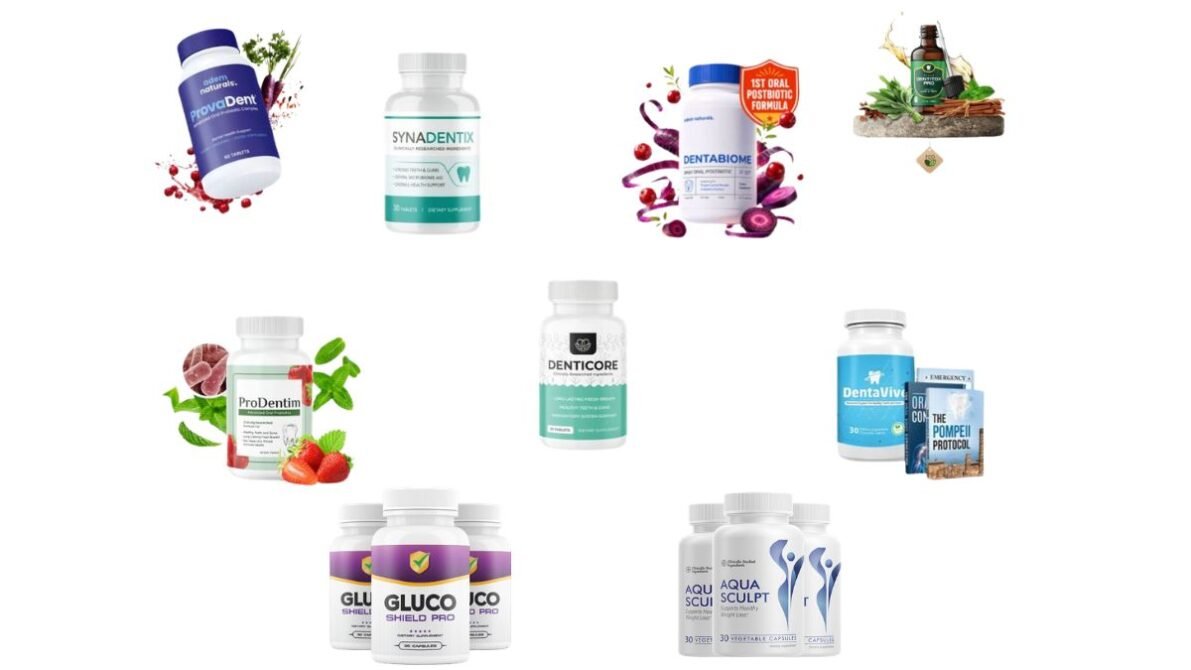
We found exactly that on one weight loss product: the images on its official page carry file names identifying a generic supplement funnel design from 2020, with the brand applied over the top. Our AquaSculpt review walks through it.
What that tells you: the effort went into the funnel, not the product page. Somebody bought a template and dropped a brand into it.
What it doesn’t tell you: that the product is fake. Templates are legitimate and cheap, and small businesses use them for good reasons. It’s a signal about investment, not about the bottle.
Check whether testimonials are text or an image. This one matters more than it sounds. If the customer reviews on a page are a single graphic rather than selectable text, you cannot copy a phrase to search for it, you cannot check whether the same quote appears on other sites, and a screen reader can’t read it. Text is checkable; an image is not.
We’ve encountered pages where the entire “proof” section is one JPEG. There’s no way to interrogate it.
Notice when competing products look identical. If two supplements that supposedly compete share the same page structure, the same section order, the same badge designs and the same testimonial layout, they were probably built from the same kit — sometimes by the same operation. That doesn’t make either product worse. It does mean that “I compared two brands and liked both pages” isn’t the independent comparison it felt like.
2. Is There a Real Business Behind It?
A few checks on the company, each taking under a minute.
Read the copyright line in the footer, and compare it to the address bar. They should match. When a page hosted at one domain carries a copyright naming a different domain, it usually means the page was copied from somewhere else and the line was never updated. We found that on the same weight loss product mentioned above, with a copyright dated several years earlier than the campaign.
Count the official websites. Search the product name and see how many sites present themselves as the official store. One is normal. Two or three might be regional variants. When you find five or more — with different prices, different ingredient lists and different guarantee terms — you can no longer rely on “I read it on the official site,” because there isn’t one official site.
The practical consequence is real: if the refund terms differ between pages, the terms that apply to you are the ones on the page you actually bought from. Screenshot them.
Look at what the address actually is. Many supplement companies list a return address that turns out to be a shared third-party fulfilment centre used by dozens of brands, not a manufacturing facility. That’s normal in direct-response commerce and not a red flag on its own. It becomes relevant when a page implies the address represents its own laboratory.
Check the parent company’s complaint record. Consumer complaint databases aggregate patterns that no seller controls. What matters isn’t a single bad review — it’s the theme. A cluster of complaints about billing, subscriptions and cancellation tells you something specific about what to expect after you pay, which no product review will.
And know what the regulator actually does. You’ll see “FDA approved facility” on a striking number of supplement pages. The FDA does not approve dietary supplements, and it does not approve the facilities that make them — supplements are regulated as food rather than drugs, with responsibility for safety sitting with the company. A facility can be FDA-registered, meaning the agency knows it exists and may inspect it. Registration is not approval, and no inspection tests whether a product works.
That phrase is one of the fastest ways to tell whether a page was written by someone who knows the rules.
3. Ingredients and Doses: The Arithmetic Nobody Does
This is where most products separate, and it’s the most useful skill in this article.
First: does the page list ingredients at all?
You’d be surprised how often the answer is no. We’ve reviewed products whose sales page contains a navigation link labelled “Ingredients” leading to a section made entirely of decorative graphics. If a seller won’t tell you what’s in a capsule before you buy it, that’s the single strongest signal on this list — not because the contents must be sinister, but because you cannot give informed consent to something nobody will describe.
Second: is the amount published?
Watch for the phrase “proprietary blend.” It sounds like a competitive advantage. What it means in practice is that you’re told the total weight of a group of ingredients, not how much of each. A blend containing 500 mg of ten ingredients might be 491 mg of the cheapest one and a trace of the other nine, and the label would look identical.
Worth flagging a specific phrase we keep encountering: “optimally dosed proprietary blend.” That’s a contradiction. It tells you the doses are correct while declining to tell you what they are.
Third — and this is the one that does the real work — compare the dose to the research.
Here’s the method, and it works for any ingredient:
- Find the named ingredient the product is built around
- Search for it with the word “randomized trial” or “meta-analysis”
- Find the daily dose the studies used
- Compare
The gaps are frequently enormous, and they’re the reason most of these products can’t work regardless of anything else. A botanical studied at 1,000–1,500 mg per day, present in a capsule shared among eleven ingredients, is not delivering what the research measured. A fibre whose approved health claim requires three grams daily, split across three doses, cannot be meaningfully present in one tablet.
You don’t need to judge whether the research is good. You only need to notice that the product isn’t delivering the amount the research used — which makes the quality of that research irrelevant.
Fourth: for probiotics specifically, look for a strain code.
Probiotic effects are strain-specific, not species-specific. That’s one of the better-established principles in the field, and it’s the check almost nobody runs.
Lactobacillus reuteri is a species. Lactobacillus reuteri DSM 17938 is a strain. Only the second connects to a published study, because the studies were done on particular lineages. Two strains of the same species can behave completely differently.
So when a label advertises “four probiotic strains” as a feature and names none of them, the research on named strains doesn’t transfer to what’s in the bottle. Our oral health work runs into this repeatedly — our ProvaDent review covers a product advertising strains as a headline feature without identifying a single one, and our guide to oral health supplements lists the strains that do have published evidence, so you can check a label against them.
What a missing dose doesn’t mean: that the product is unsafe, or that the company is dishonest. Plenty of manufacturers use proprietary blends for ordinary competitive reasons. It means you can’t verify it — so treat the claim as unverified rather than as false.
4. Claims That Should Stop You
Some assertions are worth pausing on regardless of how the page looks.
Anything suggesting you won’t need prescription medication. This is the most consequential category, and it’s usually phrased carefully — “without injections,” “no medication needed,” “the natural alternative to.” A supplement isn’t a smaller version of a prescription drug; it’s a different thing, tested differently or not at all.
The clearest case we’ve encountered was a blood sugar product promising control “with no insulin shots or medication” — which contained a herb whose defining pharmacological property is reducing the effectiveness of other medications. Our Gluco Shield Pro review sets that out in full.
Absolute language. “Cure,” “reverse,” “regrow,” “eliminate,” “permanently.” Biology is rarely absolute, and the tissues these products target often can’t do what’s promised. Bone lost to gum disease doesn’t return. A cavity that has broken through enamel doesn’t heal. Careful sellers write “may support”; the gap between that and “reverses” is the gap between a compliance-aware company and one that isn’t.
Comparisons to expensive prescription drugs. When a page invokes a well-known medication’s results — a weight loss percentage, for instance — check whether the comparison measures the same thing. Usually the drug’s figure comes from a large randomised trial and the supplement has no trial at all. Citing the drug’s number next to your product implies an equivalence nobody has measured.
Marketing hooks that appear across competing brands. If several rival products in the same category are all built on the same striking mechanism, that mechanism probably originated in an advertising campaign rather than a laboratory. Viral hooks get reused because they convert, and the reuse is the tell. When you see one, search its name plus “origin” — you’ll often find it traces to a single product’s launch a few years earlier.
And invented conditions. Watch for a named syndrome you’ve never heard of, which conveniently has no diagnostic test and one specific fix. Real conditions have diagnostic criteria and multiple treatment approaches.
5. Does the Route Reach the Problem?
This is the check we developed across several categories, and it’s the one that most often decides an answer before any ingredient analysis.
The question: can this product physically reach the tissue where the problem is?
It depends on two things: whether the target tissue has a blood supply, and whether there’s a barrier between the delivery route and the problem.
Some worked examples:
Tooth enamel has no blood supply. It’s acellular and avascular — nothing you swallow reaches it, at any dose, ever. Enamel takes up minerals from saliva, at the surface. So a swallowed capsule promising to rebuild enamel is describing a route that doesn’t exist.
Gum tissue does have a blood supply. So systemic nutrition can plausibly reach it — the question becomes dose rather than route.
Nail fungus lives under a dense keratin plate, which is why topical treatments struggle and oral antifungals work better. That’s the reverse of the dental answer, decided by the same logic.
Skin blocks charged molecules. A patch delivering something with a permanent electrical charge faces a barrier that has nothing to do with whether the compound works — it works by mouth and can’t get through skin.
The practical version: when a product uses an unusual delivery format — a patch, sublingual drops, a spray, a gummy, or a swallowed capsule for a surface problem — ask the delivery question before the efficacy question. It frequently answers everything.
And a variant worth knowing: some formulas mix ingredients needing different routes. A liquid applied to your gums might contain both something that works on contact and vitamins that only work once absorbed through your gut. Half of that formula is being delivered correctly and half isn’t — and the half that isn’t is often the half justifying the headline claim.
6. Funnel Mechanics Worth Recognising
Finally, the commercial machinery. None of this is about the product; all of it is about what happens to your money.
Price hidden behind a quiz. Some pages won’t show a price until you’ve completed a questionnaire about your habits and your body. That’s deliberate: a price you can compare is a price you might reject, while a price revealed after a personalised assessment arrives framed as a recommendation — after you’ve invested several minutes and handed over information.
Countdown timers that reset. Reload the page. If the timer starts over, it’s a script, not a reservation. Same with stock counters that never reach zero.
Anchor prices nobody has paid. A struck-through “regular price” several times the actual price isn’t a discount; it’s a framing device. Occasionally the arithmetic doesn’t even reconcile — we’ve seen “save $714” attached to a figure that would be a saving of $1,714, and a three-bottle “regular price” higher than the six-bottle one.
Links that route to data capture instead of the product. An affiliate link that lands you on a form requesting your name, address and phone number before any product information is collecting a lead first and selling second.
And subscriptions presented as the discount. The cheaper price is frequently the recurring one, and the one-time price is less prominent. Before you buy anything, find the cancellation method — if it requires a phone call rather than a click in your account, factor that in and diarise a reminder before the second charge.
The Checklist
Ten questions. They work on any product, in any category, including ones we’ve never reviewed.
- Does the page list every ingredient by name? If not, stop here.
- Is an amount published for each one — or only a “proprietary blend” total?
- How does the main ingredient’s dose compare to the trials? Search the ingredient plus “randomized trial,” find the daily dose, compare.
- For probiotics, is there a strain code — letters and numbers — or only a species name?
- Do the copyright, the domain and the company name match?
- How many websites claim to be official, and do they agree with each other?
- Are the testimonials text you can search, or an image you can’t?
- Does any claim suggest you won’t need prescribed medication? That’s a conversation with a prescriber, not a purchase.
- Can the delivery route physically reach the tissue? Swallowed for a surface problem, or topical for something that needs absorption?
- Before paying: is this one-time or recurring, and how do you cancel? Screenshot the terms on the day you order.
If a product passes all ten, it may still not work — no checklist substitutes for evidence. But it will be a product you can evaluate honestly, which is more than most of this market offers.
A Word on Reviews, Including Ours
Since this article is about spotting unreliable reviews, it’s fair to apply the same standard here.
We earn affiliate commissions. When we link to a product and you buy it, we’re paid. That arrangement creates an incentive, and you should read us knowing it.
What we do about it: we publish the doses and compare them to the research whether or not that helps the sale. We name what we couldn’t verify. And on several products, we’ve published without any purchase link at all — because when a seller won’t say what’s in a capsule, we don’t think we can honestly point you toward it.
The standard we’d suggest for any review, including this site’s: does it tell you something the seller wouldn’t? Does it name specific amounts and compare them to something? Does it say what it couldn’t confirm?
A review that only agrees with the sales page isn’t a review. It’s the sales page with a different font.
Frequently Asked Questions
Are supplement reviews on Amazon trustworthy?
More than sales-page testimonials, because verified-purchase systems have fraud controls — but not entirely, since review manipulation exists. Read the two- and three-star reviews first: they’re usually the most informative, detailed enough to be genuine and balanced enough to be useful. Note too that many direct-sold supplements aren’t on Amazon at all, which means no verified pool exists for them in either direction.
What does “proprietary blend” actually mean?
That you’re told the combined weight of several ingredients, not how much of each. It’s legal and common, and it makes the amounts unverifiable — you can’t compare them against research, and you can’t tell whether the ingredient you’re buying it for is present in a meaningful quantity or as a trace.
Does the FDA approve supplements?
No. The FDA has no authority to approve dietary supplements for safety or effectiveness, or to approve their labelling, because supplements are regulated as food rather than drugs. A facility can be FDA-registered — meaning the agency knows it exists and may inspect it — but registration is not approval, and “FDA approved” on a supplement page is inaccurate wherever it appears.
Is it illegal to publish fake reviews?
In the United States, the FTC’s Rule on the Use of Consumer Reviews and Testimonials took effect in October 2024, and it prohibits the sale or purchase of fake reviews, including reviews by people who don’t exist or never used the product, along with testimonials misrepresenting the reviewer’s experience. It also covers compensation conditioned on expressing a particular sentiment. Enforcement is the agency’s job, but knowing the rule exists helps you recognise what you’re looking at.
How can I tell if a supplement dose is high enough?
Search the ingredient name plus “randomized trial” or “meta-analysis,” find the daily dose used, and compare it to the label. You don’t need to assess the research quality — if the product delivers a tenth of what was studied, the quality of that study doesn’t matter to your decision.

Raphael Albert is the founder and content creator of Nutra Pulse. Passionate about health, nutrition, fitness, and wellness, he spends his time researching scientific studies, health trends, and evidence-based lifestyle strategies to create informative and easy-to-understand content. While he is not a doctor or licensed healthcare professional, his goal is to help readers make more informed wellness decisions. All content is for educational purposes only and should not replace professional medical advice. Always consult a qualified healthcare provider regarding your health concerns.

1 thought on “How to Spot a Fake or Low-Quality Supplement Review”