Transparency note: this site normally earns a commission when readers buy through our links. There are no purchase links in this article, and we earn nothing whatever you decide. The official affiliate link for this product leads to a form requesting your name, address and phone number before disclosing a single ingredient — and we’re not willing to send you there for money.
These statements have not been evaluated by the Food and Drug Administration. This product is not intended to diagnose, treat, cure, or prevent any disease. Difficulty losing weight despite consistent effort deserves a proper look — thyroid problems, medication effects, sleep apnoea and insulin resistance all present that way, and all are treatable.
I clicked through to buy AquaSculpt and the first thing the page wanted was my home address.
Full name. Street address. Country, state, city, postcode. Email. Phone number. All of it before any ingredient, any dose, any price, any description of what the product actually is — behind a fifteen-minute countdown, on a page with a navigation link labelled “Ingredients” that leads to a section containing nothing but pictures.
That’s the buying experience, and it’s the honest place to start this AquaSculpt review, because it shapes everything else. You are being asked to hand over your contact details in exchange for the information a label would normally give you for free.
What follows is what I could verify, what I couldn’t, and — most usefully — a straight answer on the “ice water hack” that this whole category is built on. That mechanism is real. The numbers attached to it are much smaller than the marketing suggests, and there’s a finding about brown fat that explains why results are so wildly inconsistent between people.
What I Could and Couldn’t Verify
Let me be transparent about the limits of this review, because they’re unusual.
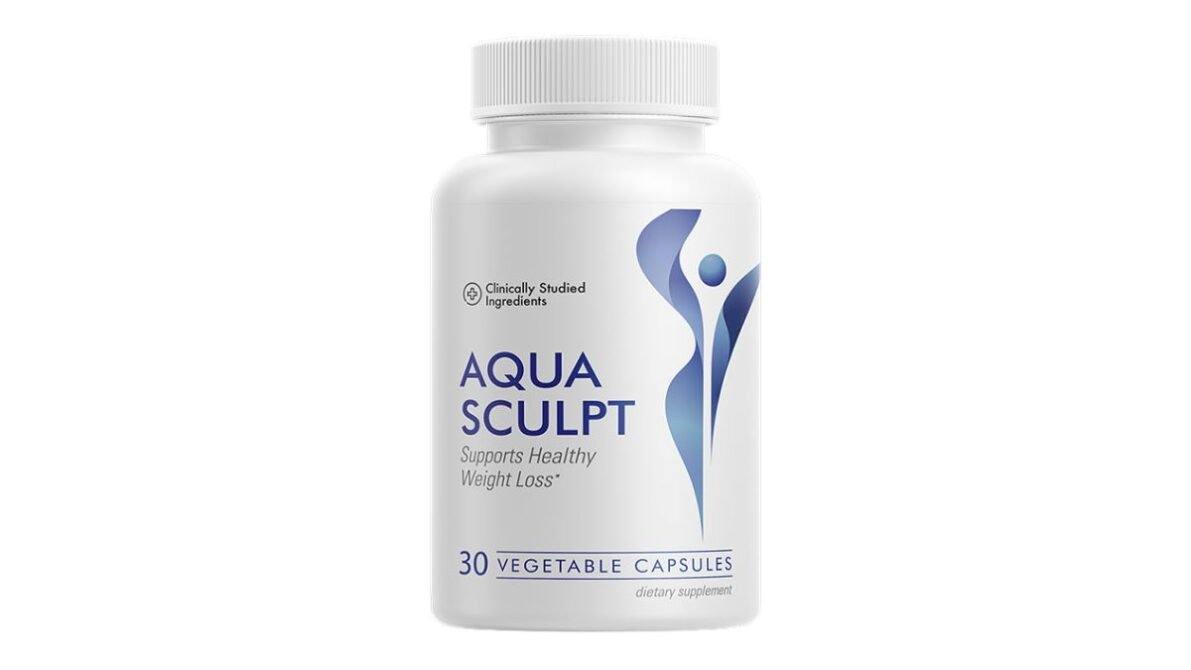
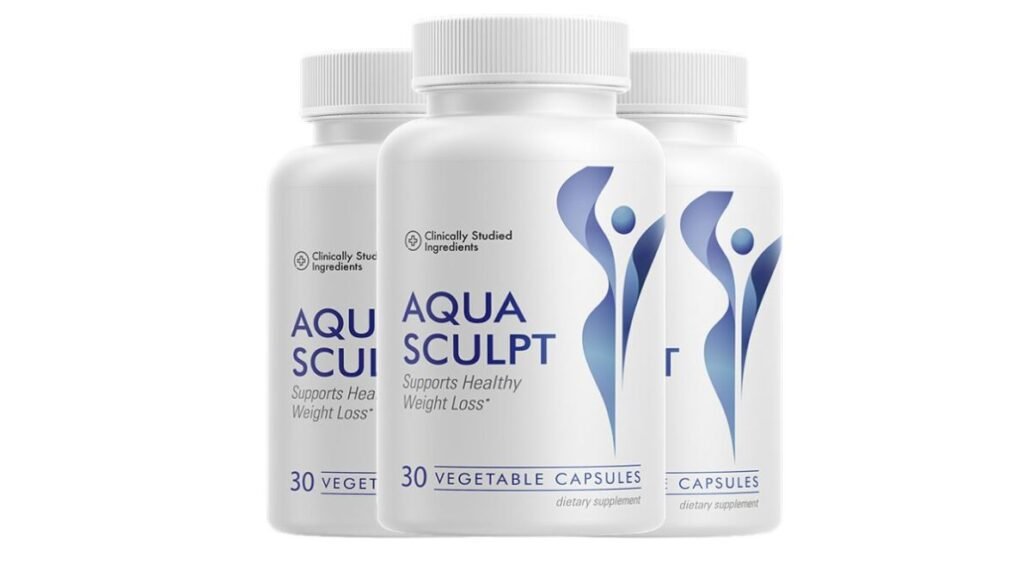
What the official page shows: a product image, three benefit bullets — supports healthy weight loss, maintains slim figure, supports healthy metabolism — a countdown timer, a contact form, and badges reading GMO-free, 100% natural, and money-back guarantee. ClickBank is the retailer of record, with a full and correctly worded disclaimer in the footer.
What it doesn’t show: a single ingredient. Not a list, not a supplement facts panel, not a label image, not a sentence describing the formula. The word “Ingredients” appears as a navigation link and as a section heading, and the section contains a decorative graphic and a product photo.
It also doesn’t state the format. There’s no indication of whether this is a capsule, a powder, or a liquid.
Secondary sources describe the ingredients as some combination of chlorogenic acid, L-carnitine, green tea catechins, chromium, L-theanine, Panax ginseng, banaba and zinc — but they don’t fully agree with each other, and none publishes a dose.
Two small details worth noting. The footer copyright reads “© 2022 getaquasculpt.com” — a different domain from the one you’re actually on, dated four years ago. And the customer testimonials aren’t text: they’re a single image file, which means you cannot read them properly, copy a phrase to search it, or verify any of it.
The Image Filenames Say “Supplement-MidForm-2020”
Right-click any image on the page and look at the address. Here’s what you find:
Supplement-MidForm-2020---Proof-Grid.jpg Supplement-MidForm-2020---Natural.svg Supplement-MidForm-2020---Footer-Logo-1.svg Supplement-MidForm-2020---arrow-2.svg
“Supplement-MidForm-2020” is a template name. It’s a generic supplement funnel design — the “mid-form” layout, from 2020 — with AquaSculpt branding applied over it. The testimonial grid, the trust badges, the footer logos: all of it is stock template furniture.
That doesn’t mean the product doesn’t exist or that it’s unsafe. Plenty of legitimate businesses use templates.
What it tells you is where the effort went. The page you’re being asked to trust with your address and your card details was assembled from a four-year-old design kit, retains a copyright naming a different domain, and publishes its social proof as an unreadable image. None of that describes a company investing in the thing you’d actually want them to invest in, which is telling you what’s in the bottle.
The Ice Water Hack: Real Physiology, Tiny Numbers
Now the substantive part, and I want to be genuinely fair here because the underlying science isn’t invented.
Drinking cold water does cost you energy. Your body maintains a core temperature around 37°C, so water arriving at 4°C has to be warmed. That warming requires heat, and producing heat requires burning fuel. The mechanism is real thermodynamics.
The question is magnitude, and this is where the marketing and the research part company.
Warming half a litre of ice water to body temperature costs roughly sixteen calories. Not sixteen hundred. Sixteen — about the energy in two almonds.
Early laboratory work reported larger increases in energy expenditure after drinking 500 ml of water, and that study is the source most of this category cites. Subsequent investigations have generally measured smaller effects than originally claimed, and some newer studies find minimal or no significant thermogenesis compared with control conditions. The current summary from mainstream sources is that real-world increases in calorie burning after drinking water are on the order of a few calories per glass.
So: real effect, correctly described in direction, and roughly a hundredfold smaller than the framing implies.
There is a genuine, useful thing here that gets lost. Drinking water before meals does help some people eat less, and staying hydrated supports everything else you’re doing. That’s worth doing. It just isn’t thermogenesis doing the work.
Brown Fat Is Real — Cold Drinks Barely Touch It
The more sophisticated version of the claim invokes brown adipose tissue, and it’s worth separating what’s true from what’s transferred.
Brown fat is genuinely different from ordinary fat. White fat stores energy; brown fat is packed with mitochondria and burns glucose and fat specifically to produce heat. Babies have a lot of it. Adults retain smaller deposits, mainly around the neck, shoulders and spine.
Cold exposure genuinely activates it, and that’s an active research area for metabolic disease.
But the activating stimulus is whole-body cold — cold rooms, cold showers, ice baths, sustained exposure to low ambient temperature. A cold drink passing through your digestive tract doesn’t meaningfully lower your core temperature or trigger the sympathetic response that switches brown fat on. Drinking cold water is a far weaker stimulus than environmental cold, and the metabolic bump stays modest.
There’s a further complication that the research is candid about. Adult humans have proportionally far less brown fat than the rodents most of this research was done in, and human and rodent brown fat appear to have different molecular signatures and functionality — so it remains unclear whether human brown fat can produce a relevant increase in energy expenditure in adults at all.
That’s the honest state of the field: promising, actively studied, and not yet established as a lever adults can pull for weight loss — let alone by drinking something cold.
The Tenfold Difference Nobody Mentions
This is the finding I’d most want you to take away, because it explains why cold-exposure results are so inconsistent and why testimonials in this category are useless as guidance.
In one study, thirteen healthy young men underwent two hours of cold exposure at 19°C. Only six of them had detectable brown fat activity.
Those six increased their energy expenditure by roughly 410 calories per day. The other seven managed about 42.
Same protocol. Same age range. Similar body composition. Close to a tenfold difference in response.
Two things follow from that.
First, whether cold does anything for you is largely decided by biology you can’t see. You don’t know how much brown fat you have, and there’s no practical way to find out outside a research setting.
Second, it explains the testimonials. In any group trying a cold-based approach, a minority will have a genuine metabolic response and most will have almost none. The ones who responded write enthusiastic reviews. The ones who didn’t assume they did it wrong. Neither group’s experience predicts yours.
That 410-calorie figure is also, incidentally, where the impressive numbers in this category’s advertising come from — detached from the fact that it applied to fewer than half the participants, under two hours of genuine cold exposure, not from a drink.
Where the “Ice Hack” Actually Came From
Worth knowing, because it reframes the whole thing.
The ice hack wasn’t a discovery that spawned products. It was a marketing angle that spawned products. It went viral across 2022 and 2023, built primarily as promotion for a weight loss supplement, and the framing has since been reused by a series of competing products in the same category.
The underlying science of cold thermogenesis is real. The effect size was exaggerated far beyond what the research supports, and the resulting hook proved durable enough that new brands keep adopting it.
That’s useful context for any product you encounter using this angle: you’re looking at a marketing lineage, not a research lineage.
Drops, Thirty Capsules, or Ninety? Sources Disagree
A practical problem when researching this product, and one I couldn’t resolve from the source.
Different sources describe AquaSculpt in incompatible ways: as fast-absorbing liquid drops, as thirty vegetarian capsules per bottle, and — on at least one marketplace listing — as ninety capsules with a different formulation described as thirteen wildly crafted herbs.
Those aren’t three descriptions of one product. Drops and capsules absorb differently and are dosed differently, and thirteen herbs is a different formula from the chlorogenic-acid-and-green-tea combination other sources describe.
Normally I’d resolve this by checking the official page. Here I can’t, because the official page doesn’t state the format or the ingredients.
That leaves three possibilities I can’t distinguish between: the product has been reformulated and older descriptions persist; multiple sellers are shipping different things under the same name; or some of the secondary coverage is simply wrong. None of them is reassuring, and all of them mean you should read the label on whatever actually arrives rather than relying on any description you found online, including this one.
What I Liked
ClickBank is the retailer of record, and the disclaimer is complete and correctly worded — including the explicit statement that ClickBank’s role isn’t an endorsement of any claim made in promoting the product.
The claim language on the page is restrained. “Supports healthy weight loss,” “supports healthy metabolism.” No cure claims, no numbers, no promises of pounds lost. That’s better than most of this category, and it deserves credit.
The FDA disclaimer is present, along with advice to consult a physician if pregnant, nursing, taking medication or managing a condition.
The testimonial disclaimer is honest — it states plainly that results forwarded by users aren’t intended to represent or guarantee that anyone will achieve similar results.
The ingredients described in secondary sources aren’t unreasonable. Chlorogenic acid, green tea, L-carnitine and chromium are the standard thermogenic shortlist. They’re modest in effect and well-characterised, not exotic.
The underlying hydration advice is genuinely good. Drinking water, including before meals, is a sensible habit with real if unglamorous benefits.
Things to Consider
The page requests your full contact details before disclosing anything about the product.
No ingredients, no doses, and no format are published on the official page I reached.
Image filenames identify a generic 2020 supplement template.
The copyright names a different domain than the site you’re on, dated 2022.
Testimonials are published as a single image, unreadable and unverifiable.
Sources disagree on whether it’s drops, thirty capsules, or ninety.
A fifteen-minute countdown appears on a page that hasn’t yet told you what you’d be buying.
The ice water mechanism is real at a magnitude of a few calories per glass.
The “Unauthorized Seller” Warning
Several pages promoting this product warn against buying from marketplace sellers on grounds of counterfeits. That deserves a careful answer, because it has two readings and both are partly true.
The legitimate reading: counterfeit supplements are a real problem. Buying an unlabelled product from an unauthorised marketplace seller genuinely does mean you don’t know what you’re getting, and direct-from-brand purchase gives you a refund route that a third-party listing may not.
The less legitimate reading: this framing also pre-emptively explains away any negative experience. If a customer has a bad result or receives something that doesn’t match the description, the answer is ready-made — you must have bought a fake. That deflection appears across this market with striking consistency, and it usually sits alongside claims that the product isn’t available on marketplaces at all, which sits awkwardly with the existence of listings there.
The practical position: buy from wherever gives you an enforceable refund, keep the receipt, and — most importantly — read the label on what actually arrives. If the physical bottle doesn’t list ingredients and amounts, that’s a problem regardless of where you bought it.
Who Should Be Careful
This section is harder to write than usual, because I can’t tell you what’s in the product. That limitation is itself the warning.
Anyone taking any prescription medication should treat an undisclosed formula as a reason to ask a pharmacist rather than assume. If the secondary descriptions are accurate, the likely ingredients include several with interaction profiles.
Anyone taking a green tea extract product already, or a fat burner. Green tea catechins are among the better-documented causes of supplement-associated liver injury — the European Food Safety Authority concluded that catechins at or above 800 mg of EGCG daily are associated with elevated liver enzymes, and that no supplemental dose could be identified as safe. If this product contains green tea extract at an unstated amount, count your exposures.
Anyone with liver disease, for the same reason.
Anyone taking diabetes medication, since chromium and several thermogenic botanicals affect blood glucose.
Anyone sensitive to stimulants, since green tea carries caffeine and no content is stated.
Anyone pregnant or breastfeeding.
Anyone with a heart condition or high blood pressure — thermogenic formulas commonly contain ingredients that raise heart rate, and you can’t check.
And the general one: persistent difficulty losing weight despite consistent effort deserves investigation. Thyroid dysfunction, medication side effects, sleep apnoea and insulin resistance all present that way and all are treatable. A blood test answers more than a supplement.
What Actually Works, and the Verdict
On the ice water question specifically: drink cold water if you like it. It costs you a few calories per glass, hydration genuinely helps, and drinking water before meals helps some people eat less. Just don’t expect thermogenesis to move the scale — the arithmetic doesn’t allow it.
If cold exposure interests you, whole-body cold — cold showers, deliberate cold exposure — is the stimulus with actual brown fat research behind it. It’s free, it’s better studied than any supplement version, and the honest caveat is that your response depends heavily on how much brown fat you happen to have.
And the unglamorous hierarchy that outperforms this entire category: a sustainable calorie deficit, protein and fibre high enough to manage hunger, resistance training to protect the muscle that drives your resting metabolism, and adequate sleep — short sleep reliably increases appetite and undermines everything else.
The verdict. AquaSculpt asks for your contact details before it tells you anything, publishes no ingredients or doses, runs on a four-year-old template with a copyright naming another domain, and is built on a mechanism that’s real at roughly a hundredth of the implied scale.
Who might reasonably buy it: I can’t construct a profile, because I can’t tell you what’s in it. If you’re drawn to the thermogenic ingredient category, chlorogenic acid and green tea are widely sold with the milligrams printed on the label, which lets you and your pharmacist see what you’re taking.
Who should skip it: anyone taking medication who can’t check for interactions, anyone already using a green tea extract product, and anyone buying on the strength of the ice water mechanism.
And why there’s no link to buy in this article. This site normally earns a commission when readers purchase through our links, and on most products we’re comfortable with that — you get an honest account, and you decide.
We couldn’t here, for four reasons that compound. The official page publishes no ingredients, so we can’t tell you what you’d be swallowing. The funnel runs on a recycled generic template whose filenames still carry its 2020 design name. The footer copyright names a different domain than the one you’re on. And the official affiliate link — the one we’d have used — leads to a form requesting your name, home address and phone number before disclosing anything about the product. We checked, and that routing is deliberate rather than a misconfiguration.
Sending you to a data-capture form for a commission, on a product whose contents nobody will state, isn’t a position we’re willing to be in. If you decide to buy after reading this, that’s entirely your call — we simply aren’t taking a cut of it.
If you’re comparing products in this category, our Java Burn review covers a chlorogenic acid product with a documented regulatory history behind that ingredient — worth reading if AquaSculpt’s likely formula appeals to you. And our guide to liver and metabolic supplements sets out the four checks that eliminate most of this market in about ten minutes.
Frequently Asked Questions
Does drinking cold water actually burn calories?
Yes, but very few. Warming half a litre of ice water to body temperature costs roughly sixteen calories. Mainstream summaries put the real-world increase in energy expenditure at a few calories per glass, and some newer studies find minimal or no significant effect. The mechanism is real thermodynamics; the magnitude is roughly a hundredth of what this category’s marketing implies.
Does cold water activate brown fat?
Not meaningfully. Brown fat is genuinely activated by cold — but by whole-body cold exposure, like cold showers or sustained low ambient temperature, not by a cold drink passing through your digestive tract. Research also notes that adults have proportionally far less brown fat than the rodents most of this work was done in, and it isn’t established that human brown fat can produce a relevant increase in energy expenditure at all.
What’s actually in AquaSculpt?
The official page I reached publishes no ingredients, no doses and no format. Secondary sources describe some combination of chlorogenic acid, L-carnitine, green tea, chromium, L-theanine, Panax ginseng, banaba and zinc — and they don’t fully agree, with some describing drops and others capsules. Read the label on whatever arrives, and if it doesn’t list amounts, that’s your answer.
Why do some people lose weight with cold exposure and others don’t?
Brown fat. In one study, thirteen healthy young men underwent two hours of cold exposure and only six had detectable brown fat activity — those six increased energy expenditure by around 410 calories a day, while the other seven managed about 42. Same protocol, close to a tenfold difference. Whether cold does anything for you is largely decided by biology you can’t see or change.

Raphael Albert is the founder and content creator of Nutra Pulse. Passionate about health, nutrition, fitness, and wellness, he spends his time researching scientific studies, health trends, and evidence-based lifestyle strategies to create informative and easy-to-understand content. While he is not a doctor or licensed healthcare professional, his goal is to help readers make more informed wellness decisions. All content is for educational purposes only and should not replace professional medical advice. Always consult a qualified healthcare provider regarding your health concerns.